Archive | My favourite recipes RSS feed for this section

Chicken curry – my Son’s favourite

8 Jun

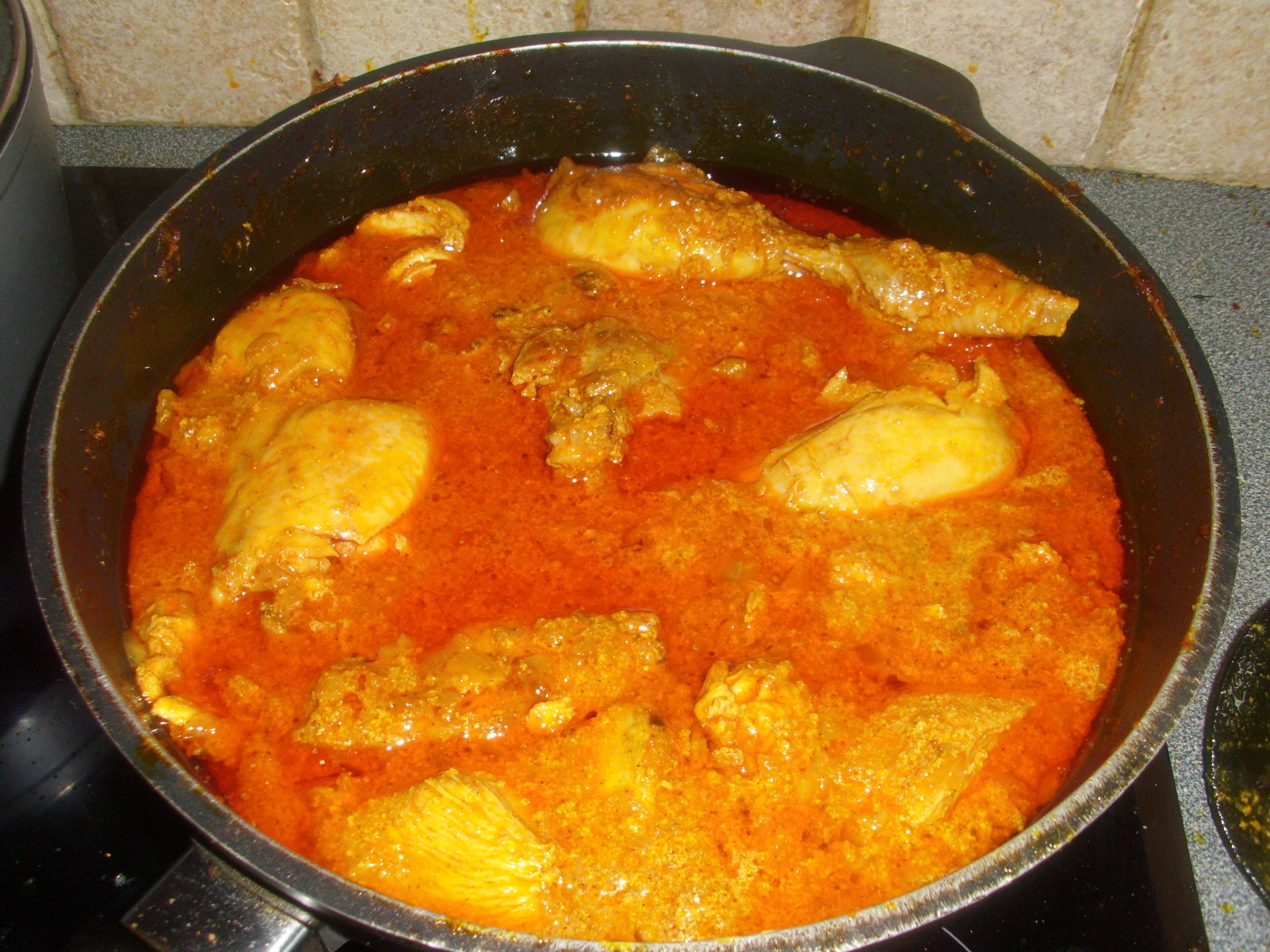
I love to experiment with curry recipes but if I ask my son what he wants me to cook for him I would bet that 99% of the time he would choose this chicken curry recipe.  I can’t remember how long I have been making it, must be 35 years at least.  I have shared it with my best friends and I dread to think how many times between us we have made it over the years.  I suppose that is credit to the fantastic recipe and the fact that it appears to be failsafe.  If you want a curry for a dinner party and know it will turn out well then this is the dish for you.  I have even made it the day before, chilled quickly and left refrigerated until the next day, so I can get ahead for a stress free dinner with friends.  If anything the flavours improve with keeping!

The recipe comes from a book called ‘Complete Indian Cookbook’ by Michael Pandya.  It was the first cookery book Terry ever bought me (a hidden agenda there I think).  The writing on the page for this recipe is almost obliterated by splashed of curry and spices, a great testament to a well used and love recipe!

There is a belief amongst Indian food lovers that the spicy and exotic food makes you sexy and virile, so be warned.  Of course you will have a long way to go before you can beat the claims of Lord Krishna of India.  He supposedly had 16,000 wives and countless casual and serious girlfriends!  I dread to think how much it cost him when they all went shopping for clothes.  Based on this, however, I might increase our curry nights to twice a week in future!

Chicken Curry                 Serves 4 – 6 (depending on the size of the chicken)

  • 100g/4oz ghee (or unsalted butter if you can’t get ghee)
  • 2 medium onions, finely chopped
  • 4 cloves garlic, crushed
  • 2 tbsp tomato puree
  • 1/2 oz root ginger, chopped
  • 1 tbsp lemon juice
  • 1 whole chicken, skinned and cut into 8 – 10 pieces
  • 4 tbsp full fat Greek yogurt
  • 300ml/1/2pt hot water
  • salt to taste
  • Chopped fresh coriander or parsley to garnish

Spices

  • 4 cloves
  • 1 x 2 inch piece cinnamon stick
  • 4 black peppercorns
  • 1 brown cardamom
  • 2 green cardamoms
  • 1 tsp turmeric
  • 1 tsp hot chilli powder
  • 1 tsp garam masala
  1. Grind the first five spices to a powder.  Melt the ghee in a large pan and fry the onion with these spices until golden brown.  Takes about 10 minutes over a low heat.
  2. Add the tomato puree, ginger, lemon juice, turmeric, chilli and garam masala and mix well.  Add the chicken pieces and stir until they are well coated in the spice mix.  Cook over a low heat for 15 minutes.
  3. Whip the yogurt then slowly add the hot water, stirring between each addition to prevent it from curdling.  Add the salt , mix then stir into the chicken and spices.  Bring to the boil then cover and simmer for about 30 minutes or until the chicken is tender and cooked through.
  4. Sprinkle with chopped coriander and serve.

    This slideshow requires JavaScript.

Balti potatoes – my favourite side dish for a curry!

29 Apr

I have been making this side dish for a curry for years.  It was my Mum’s favourite.  Whenever she came down for the weekend, which was about twice a month, she would always ask for either a curry or a stir-fry.  She would never let me get away without making these potatoes if curry was on the menu.  They are quite spicy but you can calm them down a bit by putting in less chilli.  The recipe is for four people but I usually make extra as I find it is never enough.  Fennel seeds are one of the ingredients in this dish giving it a subtle but distinctive flavour.  I thought it would be good to find out a little more about this herb.

Fennel is part of the parsley family, and every part of the plant is edible.  Grown as a perennial in the Middle East and Europe, fennel has been harvested for hundreds of years.  If you have ever grown fennel you will know it is easy to cultivate but difficult to get rid of.  We had a plant in our herb garden and, years after we had pulled it up, we were still finding new fennel plants springing up in the most unlikely places.  Butterflies love it and I think the spread of the plant could be due to the seeds being spread by the butterflies and birds.

The slight licorice flavor of the herb complements sausages, fish and salads, making it popular in many cuisines.  The Greeks know it as maratho, named the herb after the famous Battle of Marathon, which was fought on a field of fennel.  It is used extensively to flavour their meats and stews. It is an ingredient in the Chinese 5 Spice powder and the Italians love to roast the bulbs in olive oil and sprinkled with parmesan or slice them raw in salads.  Fennel seeds are often used to add flavour to Italian sausages and they are a prime ingredient in some Indian cuisines.

Apart from the versatility of fennel in cooking, it has numerous medicinal properties.  Carminative properties of fennel are known from ancient times, as recorded in the Latin phrase “semen foeniculi pellit spiracula culi”, which literally means “the fennel seeds make blow the arsehole”.  Some may recognise the distinctive liquorice flavour in Gripe water, used to calm colic in babies, or in a cough linctus to calm the cough reflex.  In the Indian subcontinent, fennel seeds are eaten raw, sometimes with some sweetener, as they are said to improve eyesight.  Ancient Romans regarded fennel as the herb of sight. Root extracts were often used in tonics to clear cloudy eyes. Extracts of fennel seed have been shown in animal studies to have a potential use in the treatment of glaucoma.

Well, now we know fennel is great to have in the garden, lets look at the recipe.

Balti potatoes                                                    Serves 4

  • 3 tbsp vegetable oil
  • 1/2 tsp cumin seeds
  • 3 curry leaves
  • 1 scant tsp crushed dried red chillies
  • 1/4 tsp each of onion seeds, mustard seeds and fenugreek
  • 1/2 tsp fennel seeds
  • 3 garlic cloves finely chopped
  • 1/2 tsp grated fresh root ginger
  • 2 onions sliced
  • 6 large new potatoes (to make about the equivalent amount of potato to onion when raw)  sliced into 1/4 inch thick slices
  • small handful chopped fresh coriander
  • 1 red or green chilli, seeded and chopped finely
  1. Heat the oil in a wok.  Lower the heat slightly and add the cumin, curry leaves, dried chillies, onion, mustard and fenugreek seeds, fennel seeds, garlic and ginger.  Cook for about 1 minute or until the seeds start to pop then add the onions.  Cook gently for about 10 minutes or until the onions are soft and golden brown.
  2. Add the potatoes, coriander and green chilli.  Mix well, cover the pan and cook over a low heat for about 7 minutes or until the potatoes are tender.  Stir occasionally to prevent sticking.

    This slideshow requires JavaScript.

Lancashire Hotpot – no bones about it!

13 Apr

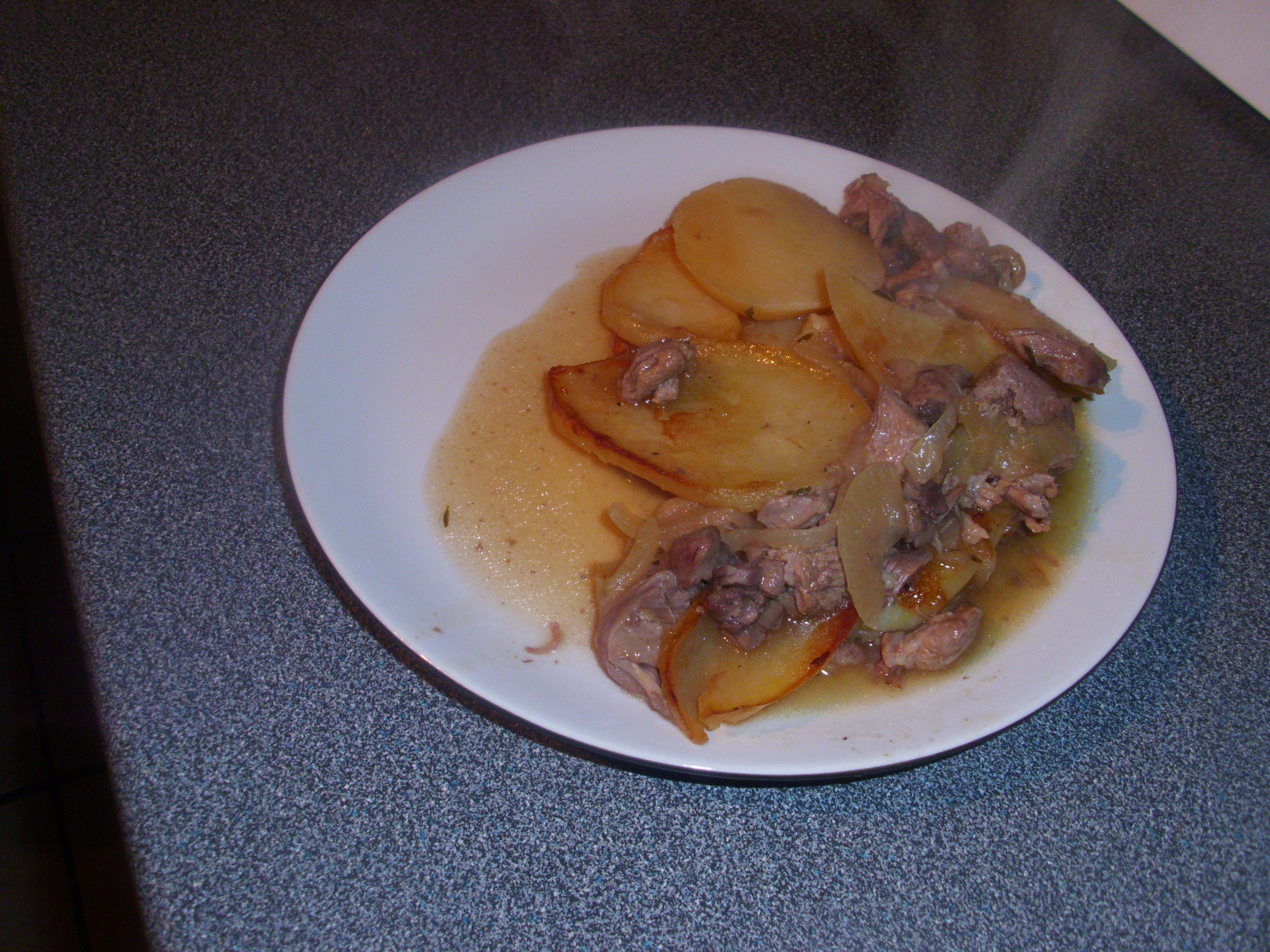
I absolutely love slow cooked meals with good, hearty ingredients of meat, vegetables and potatoes.  Lancashire hotpot is one such meal.  I have seen many recipes for this dish, in fact some have said that finding two cooks who will agree on what should go in a Lancashire hotpot is about as easy as finding a straight-talking politician. There is even disagreement about whether the basic meat included should be lamb or beef.  Most recipes, however, use lamb and this is usually on the bone which, personally, I think makes for messy eating and is almost impossible for small children to get their heads around.  One thing I do believe, is that the cheap cuts of lamb definitely have the sweetest meat and they are great for feeding a family on a low-budget.  I have made this recipe for many years, using either breast of lamb or neck chops, but you will find no bones, just tender chunks of sweet tasting meat.  I thought I would try to find out a little about the origins of Lancashire hotpot.

There is a fair amount of controversy about the origins of this dish but, in the main, the experts seem to concur that this was born from peasant food, used to fill the stomachs of hard-working industrial workers.  Given their finances, even this would probably have been a rare treat at the table.  In the days when cotton was king in towns throughout Lancashire, tall brown earthenware pots would be left on the range to simmer gently, the slow cooking getting the best out of cheap cuts of meat, using the embers of the last night’s fire. If properly assembled the dish needed no attention until the workers returned hungry from their labours. The whole family would be working long shifts in the mills, even the small children earning a few pennies a day there, so the dish was ideal for them.  The traditional meat was mutton, best-end of neck, middle neck, or even scrag end, from sheep farmed on the uplands of Lancashire since time immemorial. It is a sign of the times that mutton is now rarely sold, so modern-day hotpot is usually made from lamb.  Years ago, oysters, once the food of the poor in Britain, seasoned the gravy and gave it a more gelatinous texture, as well as adding cheap protein.  Today these have been replaced by kidneys.  Whatever the recipe this dish continues to be a firm favourite in Lancashire and now, made famous perhaps by Betty’s hotpot in Coronation Street, all over the UK.

Here is my version, made many, many times and has yet to fail.  If you have stock left over from stewing the lamb freeze it in rigid containers for another time.  Don’t worry about the kidneys, you will not know they are in the finished dish and they give the gravy an incredible flavour.  If you don’t want to go to the trouble of cooking the breast of lamb you could use left over roast lamb, cut into bite sized slices and make the lamb stock using a stock cube.

Lancashire hotpot                                 Serves 4

  • 1 breast of lamb or 4 large neck chops
  • 1 tbsp vegetable oil
  • 2 lambs kidneys, core removed and finely chopped
  • 2 onions, sliced
  • 2 tsp cornflour
  • 3/4 pt lamb stock (reserved from cooking the breast or neck chops)
  • 1 beef stock cube (not Oxo as it is too strong)
  • 1 tsp Worcester sauce
  • 1 tbsp thyme, leaves only
  • 2 lb potatoes (Maris Piper or Desiree are good), peeled and thinly sliced
  • Salt and freshly ground pepper
  1. Put the breast or neck chops of lamb into a large pan.  Barely cover with water and add two bay leaves.  Bring to the boil, cover and then simmer for about 1 hour or until the meat is falling off the bones.  Remove the meat and reserve the stock.  When the meat has cooled, remove the lean meat from the bones of the chops or, if using breast of lamb, from between the layers of fat and sinew.  Layer the meat in the bottom of an ovenproof dish.
  2. Preheat the oven to 170C/160C fan/gas 3.
  3. Heat the vegetable oil in a large, non-stick frying pan.  Fry the kidneys for 1 minute then add the onions.  Stir and fry slowly over a low heat for about 10 minutes until the onions are softened and just turning colour.  Stir in the stock, Worcester sauce, stock cube,and thyme.  Mix the cornflour with a little cold water and slowly stir into the onion gravy.  Season well, bring to the boil then pour over the meat.
  4. Top the onions with a layer of potatoes, overlapping them slightly.  Push the potatoes down a little so they become coated with stock.  Cover with foil and bake in the oven for 1-1.5 hours or until the potatoes are tender.  Remove the foil, turn the oven up to 200C/180C/gas 6 and continue cooking for a further 10-30 minutes or until the potatoes are brown.

This slideshow requires JavaScript.

Pork chops with apples and sage – divine!

1 Apr

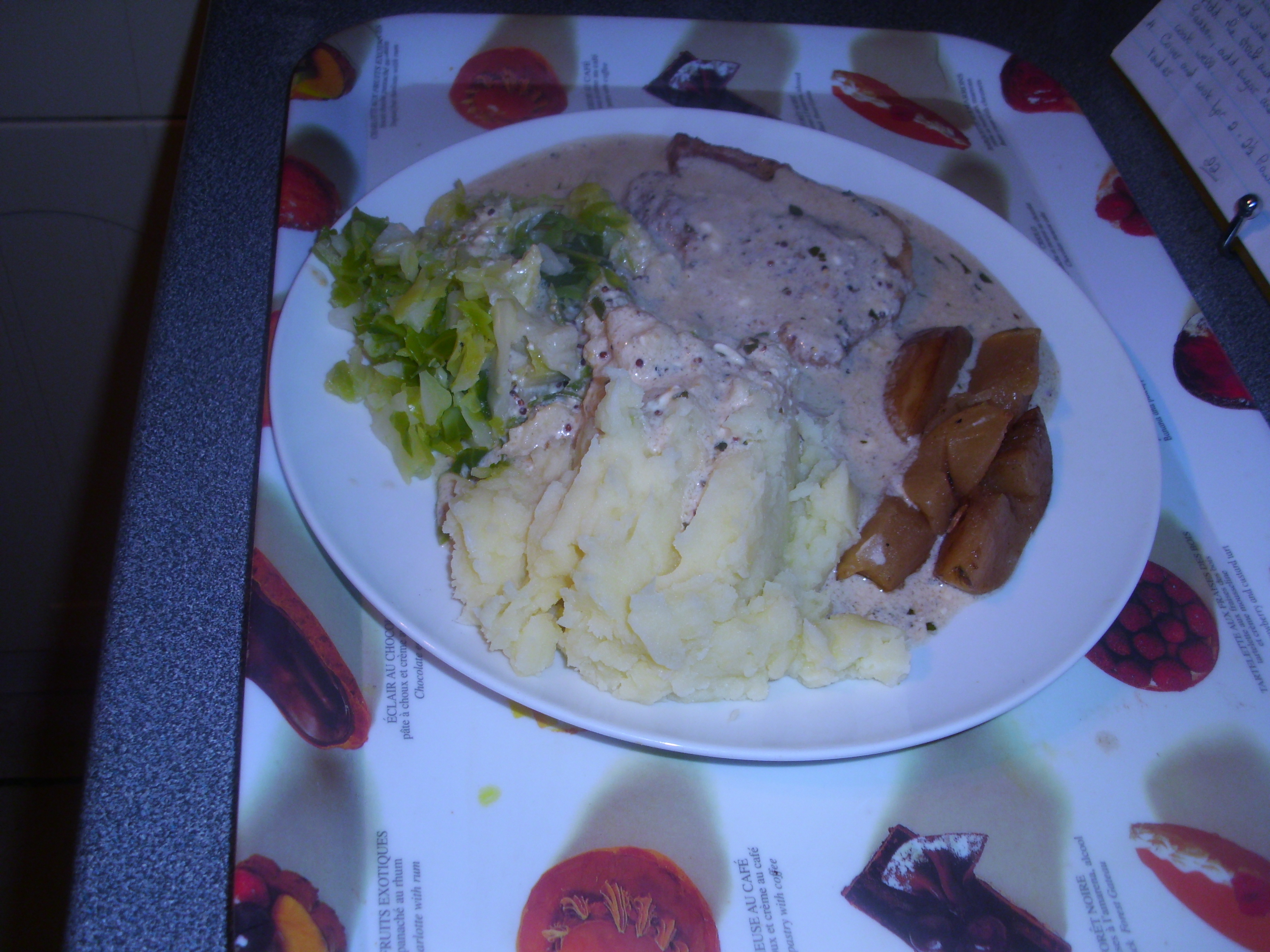
This recipe uses cider as the cooking liquor and I was a bit concerned it would be too sweet.  I shouldn’t have worried, it was absolutely gorgeous.  I served it with mashed potato and cabbage.  I think cabbage is a really underutilised vegetable and I have no idea why.  I often serve it with mashed potatoes and make sure I make more than I need so I can use up the leftovers in Bubble and Squeak for breakfast the following day.  Mmmmmm!!

Jason Atherton has recently presented in the BBC series, The Great British Food Revival.  His commentary stated that the cabbage, in particular the Hispi or pointed cabbage, is in crisis.  Sales of this type of cabbage have fallen by 71% and of cabbages in general by over 30% since the 1990’s.  The belief is that this wonderful vegetable is unpopular due to memories of school dinners, soggy cabbage, stinking cooking vapours and last, but not least, that it causes flatulence.  Mrs Beeton, no doubt the founder of the soggy, smelly cabbage, has stated in her cookery book that cabbage should be cooked for 45 minutes.Cabbage is also thought of as a winter vegetable, hence the decline in the sale of the summer growing Hispi.  The truth is, however, that today cabbages are grown all year round, so at any time you can select a cabbage that is seasonal and buy it from local producers.

Not only does the cabbage taste wonderful but it is also good for you.  Lincoln University have been doing studies on the health benefits of cabbage.  They have found that there is as much Vitamin C in 1 cabbage as there is in 1 orange.  They also contain Vitamin A which is good for eyesight and the greener the cabbage leaf, the more Vitamin A it will contain. Other studies have shown evidence that cabbages reduce cholesterol and protects against some types of cancer, whilst cabbage juice has anti-inflammatory properties.  The most recent studies show that red cabbage is good for memory loss and there are some suggestions that it may prevent the onset of Alzheimer’s.  All good reasons, I think, to eat more cabbage and follow the lead from Eastern European countries where it is part of their staple diet!

Jason did some fantastic cabbage recipes on the programme.  If you missed it you can watch it on the BBC iplayer.  Here is the link:

http://www.bbc.co.uk/iplayer/episode/b0178cf0/Great_British_Food_Revival_Series_Two_Herbs_and_Cabbage/

OK, here is the recipe.  I hope you love it as much as we do!

Pork chops with apples and cider                                Serves 4

  • 4 pork chops
  • 2 tbsp plain flour, seasoned with salt and black pepper
  • 1 tbsp olive oil
  • 1 tsp unsalted butter
  • 2 eating apples (Braeburn are good for this)
  • 250ml/9 fl oz dry cider
  • 1 tbsp chopped sage
  • 100ml/3 fl oz low fat creme fraiche
  • 1 tsp wholegrain mustard
  1. Heat the oven to 160C/150C fan/gas 3.  Lightly coat the chops in the flour.  Heat the oil and butter in a frying pan.  When the butter is dissolved fry the chops on both sides for a couple of minutes until golden brown.  Transfer to a shallow, ovenproof dish.
  2. Quarter and core the apples then cut into half to make 16 wedges.  Lower the heat in the pan then fry the apples until golden on both sides.  Arrange around the chops.
  3. Deglaze the pan with the cider then pour over the chops.  Cover the dish with foil and cook in the oven for 45 minutes to 1 hour, dependant on the thickness of the chops, or until the pork is tender and the apples are cooked.
  4. Transfer the pork and apples to a serving plate and keep warm.  Return the cooking liquor to the pan and add the sage.  Bring to the boil and reduce by half.  Take the sauce off the heat and stir in the creme fraiche and mustard.  Simmer for a few minutes then pour over the chops and serve. 

    This slideshow requires JavaScript.

Corned beef hash with a kick – a great supper dish!

28 Mar

My first taste of corned beef hash was made by my Aunty Bella.  She would be the first to admit that cooking is not her forte, but it tasted delicious, even though it looked a bit off-putting as all the ingredients were mushed together. I made it like this for years, and even packed it into a pie crust to make hash pie.  I have to say that the pastry did make it look more presentable.  Over the years I suppose I have picked up more cooking techniques.  It is true what they say, practice does make perfect although I am a long way from this Utopia at the moment.  The hash I make today is a far cry from my earlier attempts.  Each element of the dish is defined, the potatoes have a crisp outside but are tender and fluffy in the middle, there is an addition of heat from the chopped chillies and the parsley adds a freshness that lifts the dish into a new dimension.

It was interesting to read why the term ‘corned’ was used for this type of beef.  The term “Corned” comes from putting meat in a large crock and covering it with large rock-salt kernels of salt that were refered to as “corns of salt” This preserved the meat. The term Corned has been in the Oxford English Dictionary as early as 888 AD.   Salting meat goes back probably to ancient times in cold areas when they found that meat didn’t spoil if it made contact with enough salt.  This was a boon for soldiers and was actually the mainstay for British Soldiers in the Boer War and World War 1.

I was under the impression that corned beef came from Argentina and Uruguay.  I suppose that is down to Fray Bentos!  It is true that todays supplies come from these countries but, it appears that the origin of corned beef is Ireland.  In the 17th Century Ireland was, in fact, the first Country to make Corned Beef instigated by restrictions on exporting live cattle under the Cattle Acts of 1663 and 1667.  The Irish did not actually et Corned Beef themselves but exported it, canned, in large quantities to England.  The English called it Bully Beef and was the best source of beef during food rationing during the war.  It was the Irish immigrants to America that made the dish ‘Corned Beef and Cabbage’ popular in the US.  This is still eaten in huge quantities on the 17th March, St Patrick’s Day.

Well, here is the recipe.  I serve mine with a fried egg.  Makes a great brunch the morning after the night before, if you know what I mean!

Corned Beef Hash with a kick                 Serves 4

  • 3 tbsp vegetable oil
  • 1kg / 2 ibs waxy potatoes (eg Charlotte), diced into small pieces
  • 1 onion, chopped
  • 1 x 340g can Corned Beef, cut into 1 inch cubes
  • 1 red chilli, seeded and thinly sliced
  • handful of chopped fresh parsley leaves
  1. Heat the oil in a large frying pan over a medium heat and fry the potatoes, stirring occasionally, for about 15 minutes or until they are starting to turn colour.  Add the onion and continue to cook for 10 more minutes until the onion is soft and the potatoes are golden.
  2. Add the chilli and corned beef carefully stir together, then cook for 6 minutes until the hash is starting to go crispy in places.  Stir in the parsley and season with salt and black pepper.
  3. Serve hot, topped with a fried egg.

    This slideshow requires JavaScript.

Yorkshire puddings with lamb and onions – almost a meal in one!

20 Mar

Yorkshire puddings are so versatile.  I love Toad-in-the-hole and I remember having them smothered with jam for a dessert when I was young.  This recipe is taken from the idea of  Toad-in-the-hole but instead of sausages, uses lamb chops.  I have been surrounding my lamb chops roasting in the oven with a batter mix for years.  The juices from the meat give the batter a fantastic flavour and I absolutely love the crunchy bits, making sure I scrape every last one from the bottom of the dish.  Some time ago I made a Toad-in-the-hole which had used onions as well as sausages .  The result was fantastic.  I thought I would try the idea with the lamb chops and I was pleasantly surprised with the results.  I hope you give it a try.

I’ve always been a little confused about the different terminology for meat from a sheep so I took a look on Wikipedia and was amazed at how many classification there were.  Below is some information from their page.

The strict definitions for lamb, hogget and mutton vary considerably between countries. In New Zealand for example, they are defined as follows:

  • Lamb — a young sheep under 12 months of age which does not have any permanent incisor teeth in wear
  • Hogget — a sheep of either sex having no more than two permanent incisors in wear
  • Mutton — a female (ewe) or castrated male (wether) sheep having more than two permanent incisors in wear.

Younger lambs are smaller and more tender. Mutton is meat from a sheep over two years old, and has a less tender flesh. In general, the darker the colour, the older the animal. Baby lamb meat will be pale pink, while regular lamb is pinkish-red.

Other definitions include:

  • Lamb — a young sheep that is less than one year old
  • Baby lamb — a milk-fed lamb between six and eight weeks old
  • Spring lamb — a milk-fed lamb, usually three to five months old, born in late winter or early spring and sold usually before July 1
  • Yearling lamb — a young sheep between 12 and 24 months old.
  • Salt marsh lamb  — the meat of sheep which graze on salt marsh in coastal estuaries that are washed by the tides and support a range of salt-tolerant grasses and herbs such as sampfire, sorrel and sea lavender. Depending on where in the world the salt marsh is located, the nature of the plants may be subtly different.  Places where salt marsh lamb are reared in the UK include Harlech and the Gower Peninsular in Wales, the Somerset Levels and Morecombe Bay.

Well here is the recipe.

Yorkshire pudding with lamb and onions                   Serves 2 (easily doubled)

  • 4 lamb chops
  • 1 small onion, peeled and cut into wedges
  • 1 tbsp olive oil
  • 100 g/4 oz plain flour
  • 2 eggs
  • 250 ml/1/2 pt semi skimmed milk
  1. Heat oven to 220c/200c fan/gas 7.
  2. First make the batter.  Sift the flour into a bowl, add a pinch of salt and beat in the eggs and then sufficient milk to make a smooth batter that is thick enough to coat the back of a wooden spoon.  Chill in the fridge until needed.
  3. Arrange the lamb chops and onion wedges in an ovenproof dish and drizzle with the oil.  Roast for 20 minutes.
  4. Remove from the oven and then quickly pour in the batter.  Return to the oven and cook for 35 minutes or until the batter is risen and a golden brown. 

    This slideshow requires JavaScript.

Peggy’s banana bread – lovely!

12 Mar

image

During our stay in Lardos, Rhodes, we ate at BoJangles a number of times.  The food was always great as was the service and the company.  On a couple of occasions Peggy, the owner, gave us a piece of her banana bread to take home with us.  In fact, on the last occasion it was a huge slab.  Both lots of bread tasted delicious but you could tell there was a difference between them.  Peggy explained that the bread is very forgiving and that you could throw anything in, it would still work.  In the first loaf of bread she had included some fresh figs that Paniotti had given her.  You could really taste the figs in the bread, they gave it a subtle sweet and aromatic flavour.  The second loaf was more traditional with the addition of dried fruit and walnuts.  We ate both with lashings of butter and had them for breakfast and as a snack with coffee.  Wonderful!

I always seem to be left with a few bananas in my fruit bowl that look as though they have seen better days.  I don’t know if others have noticed, but I am sure bananas only last half the time they used to do years ago.  I think it is because supermarkets store them in the cold and then they start to deteriorate as soon as they are taken out and put on the shelves.  Some people like bananas very ripe but I am not one of them.  I do hate waste though so I often  fish out Peggy’s recipe use them up in this bread.  Mindful of the fact that anything goes I always adapt the recipe to what I have in the cupboard but the basic cake mixture ingredients I keep the same as Peggy’s.  The loaf always turns out perfectly and, although it doesn’t usually taste the same as the ones Peggy gave us, it is always delicious. I sometimes intend to take some over to my children when I next visit but it disappears so fast There is never any left. Sorry kids!

Before I give you the recipe I though I would see if there is anything interesting to know about bananas.

The first interesting fact I found was that the banana plant is herbaceous and it is actually the largest herbaceous flowering plant.  It grows to 20+ feet so there is no wonder that people commonly mistake these as trees.  I also didn’t know that the fruit of the banana plant can be one of three colours when ripe, the common yellow, red or purple.  I’m not sure I fancy a purple banana!

They have been around for a long time and there is archaeological evidence of a banana plantation as early as 5000 BC in Papua New Guinea.  Did you also know that the banana is naturally radioactive?   This is because of their high potassium level and the small amounts of isotope potassium-40,  found in naturally occurring potassium.  Of course, they do not contain anywhere near enough to be harmful.

Nearly every part of the banana plant is used.  The fruit, flowers and the tender core of the trunk can all be eaten.  The leaves are used as plates in some cultures and, more frequently, as cooking vessels for steamed foods.  The fibres in the leaves shoots and trunk are used to make cloth and yarn and banana paper.

Well, that was certainly more interesting than I anticipated.  Here is the recipe as I made it but, as Peggy said, anything goes so feel free to experiment.

Peggy’s Banana Bread                               Makes 1 loaf

  • 8 oz Self-raising flour
  • 1/2 tsp salt
  • 4 oz butter
  • 5 oz castor sugar
  • 3 peeled bananas (about 8 oz) broken into chunks
  • 2 eggs
  • 2 oz roughly chopped walnuts
  • 4 oz seedless sultanans (or dried fruit of your choice)
  1.  Preheat the oven to 180C/160C fan/gas 4.
  2. Put the flour, salt butter, castor sugar bananas and eggs in a food processor and process until well mixed and a smooth consistency.
  3. Coat the walnuts and dried fruit in a little flour and stir into the mix.  The flour will stop the fruit and nuts sinking in the bread and ensure an even distribution.
  4. Grease a 1 kg loaf tin then line with greaseproof paper and grease again.  Pour the mixture into the tin then bake in the oven for 1.1/4 hours or until it is risen and brown and a skewer comes out clean after piercing the centre of the bread.
  5. Turn out and cool on a cooling tray before slicing.  Serve with or without butter.

    This slideshow requires JavaScript.

Chicken fajitas – quick, easy and delicious

24 Feb

This is a repost as it has been so long since I first published it. It has to be one of the quickest and easiest dishes I have ever made and it tastes fantastic.  Friends of ours dropped in just before Christmas and I rustled it up for lunch in about 15 minutes.  Barry raved about it all the time he was eating it. 

I made these again when friends of ours came round for lunch here in Spain.   I thought Spanish food was appropriate so we lunched on chicken fajita, tomato and chorizo salad and homemade guacamole.  I threw in a few extras like grated cheese and chopped lettuce so they could choose their own fillings for the wraps.   The screenshow is not great.  I blame it on the Sangria I was drinking while I was cooking them.  Once again, though, they were a complete hit.  I believe even the least confident of cooks will definitely be able to make these and they will be a complete success.

As my blog followers know, I always try to include some interesting facts around the recipe I have posted.  in this case it is difficult to do that as I have already written about fajita in my Beef Fajita post.  The link is included if you have not read it.  I may as well go straight to the recipe then and free up some time for a little bit more of that Sangria.  Salute!

Chicken fajita                            Serves 4

  • 4-8 flour tortillas
  • 3 small or 2 large chicken breasts, sliced into 1/4 inch strips
  • 2 red peppers, sliced thinly
  • 1 large red onion, sliced thinly
  • 1 red chilli, sliced thinly (leave seeds in)
  • olive oil
  • juice 1 lime
  1. Heat the oil in a large pan then fry the peppers and onion over a high heat for about 5 minutes, stir time to prevent them from burning.  Remove and set aside.
  2. Add the chicken to the pan and stir-fry for about 8 minutes or until the chicken is cooked through.  Add the chilli during the last couple of minutes.
  3. Return the onion and pepper mix to the pan and mix well.  Let it heat through for a couple of minutes then add the lime juice.  Mix well.
  4. Serve with the warmed tortillas (as per packet instructions) and a selection of accompaniments eg crunchy lettuce, chopped, guacamole, sour cream, cheese. 

    This slideshow requires JavaScript.

Related articles

Chicken Dopiaza – delicious!

8 Feb

Most Friday nights we go out early doors for a few drinks and a catch up with friends, then home for a home-made curry.  When we were first married I used to hate curry but my husband has loved it since college when he used to visit Abdul’s in Swansea and have a madras with half chips and half rice.  I remember the first curry I made.  A friend gave me the recipe and it was really just vegetable stew with some curry powder in.  Yuk!!!  I think the turning point was when friends from Walsall came for the weekend, armed with a home-made chicken curry made from fresh spices.  Since then I have never looked back!  I always use fresh spices nowadays, unless I make a Chinese Curry.  Did you know you can actually buy Chinese Curry Paste and make a really authentic tasting Chinese Curry!

The curry I made last night was Chicken Dopiaza (Chicken with Onions).  Do means two and piaz means onions in Hindi so the term describes a dish that has used onions in two different ways or has double the ration of onions to meat.  This dish comes from Bengal and is traditionally Muslim.  I think this is the best Chicken Dopiaza I have ever tasted.  Takeaways and those eaten in restaurants do not compare!  It can be a bit fiddley but well worth the effort.  You can make it in advance, in fact it tastes even better if left to mature for a day in the fridge, and I have frozen it successfully as well so great for left overs or if you are only cooking for two and want a ready meal for another time.

First a bit of trivia – today lets look at cinnamon.

Cinnamon has been used a  highly valued spice since before Christ.  There are records of it first being imported into Egypt in 2000 BC, and it is frequently mentioned in the Bible (Hebrew).  The spice is taken from the inner bark of a Cinnamon Tree.  Once dried the bark curls up, producing the more recognised cinnamon sticks you can buy today.  Its flavour is due to an aromatic oil which makes up about 1% of its composition.  Cinnamon’s medicinal benefits range from curing common cold, relieving rheumatism, aiding digestion and helping some menstrual problems.  It is a natural food preservative and helps relieve diarrhoea, possible reasons for including it in cuisine of hot countries where meat quickly deteriorates.

I have tried many recipes for Chicken Dopiaza, but this is the one I love the best.  It comes from a small recipe book titled ’50 great curries of India’, written by Camellia Panjabi (ISBN 1-84509-264-3). It’s a great book and I highly recommend it if you love curry.  I have adapted this to suit our tastes so buy the book for the original recipe.

Chicken Dopiaza                                                              serves 4

  • 1 small roasting chicken cut into 8 pieces or 3 chicken breast cut into bite sized pieces
  • 5 medium onions
  • 1.5 tsp red chilli powder
  • 3 tbsp full-fat yogurt, whisked
  • 50 ml sunflower oil
  • 1 plump garlic cloves, finely chopped
  • 1 cinnamon leaves or bay leaves
  • 2.5cm (1in) cinnamon stick
  • 4 cardamoms
  • 3/4 tsp peppercorns
  • 6 cloves
  • 1 whole red chillies
  • 1 tbsp ginger puree
  • 1/2 tsp turmeric
  • 2 tomatoes, chopped
  • 1 tbsp butter
  • pinch sugar
  • salt
  • 1 tsp garam masala
  1. Cut 2 of the onions in half. Chop 1 coarsely.  Blend the remaining 2 and squeeze to extract the juice, discarding the pulp.
  2. Mix the chilli powder with a little water to form a paste.
  3. Heat the oil in a heavy based pan and fry the chopped onions.  Remove and reserve, leaving the remaining oil in the pan.
  4. Grind the cardamoms, peppercorns and cloves together
  5. In the pan, fry the garlic, bay leaves, cinnamon stick, ground spices and whole chillies.
  6. After 30 seconds add the ginger puree, chilli paste, turmeric and garam masala, stirring continuously.  Add the chicken and tomatoes, followed by the butter, yogurt and sugar.  Mix carefully to coat the chicken in the spice mix and then cook for 10 – 12 minutes, making sure the spices do not stick to the bottom of the pan.  Add a little water if it looks like it is getting too dry.
  7. Add the onion halves, followed by the onion juice and salt to taste.  Stir for 2 – 3 minutes then transfer to a casserole and bake in the oven, preheated to 150C/325F/gas mark 3 and cook for 20-25 minutes or until the chicken is cooked through.  Mix in half the fried onions.
  8. Serve, sprinkling the remaining fried onion on top.

I serve this with chutney and pilau rice.

Hope you enjoy it. 

This slideshow requires JavaScript.

Beef Roganjosh – perfect to come home to after early doors at the pub.

31 Jan

 The recipe I have chosen today is one that I have cooked many times over the years.  We normally have some sort of chicken curry on a Friday but this week I fancied beef.  It is difficult to find a recipe for beef curry, as a number of religions, cattle are considered sacred.  Some regions, especially India, have banned the slaughter of cattle and eating the meat is taboo.

It is possible that the cow was considered sacred because it had a major role in the lives of the Vedic people.  They used the milk to make dairy products and the cow itself to till the ground.  Even the cow’s excrement was put to use, as fuel, fertilizer and for producing  psilocybin mushrooms.  These grow naturally from the cow dung and, in modern-day, are known as magic mushrooms!  There are some scholars who disagree that the cow has always been sacred.  They can cite early Hindu scriptures that show cows and oxen were killed and eaten in ancient times.  Today, there are some Hindus who eat beef.  In fact, the Dalit Hindus, who have always eaten meat, often protest about having their cow eating rights taken away from them.

If anyone who reads this recipe does not eat beef for religious reasons,  lamb can be substituted.  The cooking time may, however, need to be reduced.

Beef Rogan Josh         Serves 4

  • 2 tbsp ghee (clarified butter) or vegetable oil
  • 2lbs braising beef, trimmed of all fat and sinews and cut into 1 inch cubes
  • 4 bay leaves
  • 1 tbsp salt
  • 1 pint/600 ml hot water

Spices

  • 2 brown cardamoms
  • 6 cloves
  • 6 black peppercorns
  • 1 tsp cumin seeds
  • 2 inch piece cinnamon stick

Vegetable Mix

  • 2 tbsp ghee or vegetable oil
  • 1 onion, chopped
  • 4 green cardamoms
  • 4 tbsp tomato puree
  • 150 ml full fat natural yogurt

Paste

  • 1 onion, roughly chopped
  • 6 cloves garlic
  • 1 tbsp coriander seeds, roasted
  • 1 oz/25 g root ginger
  • 1 tsp red chilli powder
  • 1.5 tsp turmeric powder
  • 1 tsp garam masala
  1. Preheat an oven to 160C/150C fan/gas 3.
  2. Grind the spices in a small grinder.  Melt the ghee in a large pan and fry the beef, bay leaves and spices together for about 15 minutes, over a low heat.  Remove with a slotted spoon and set aside.
  3. Melt a little more ghee, if necessary, in the pan and fry the onion and cardamom in the vegetable mix together. gently, until the onions are golden, about 10 minutes.  Add the tomato puree and mix well.
  4. Place all the paste ingredients in a small food processor and blend to a smooth paste.  Mix the paste into the vegetables and cook, stirring continuously, for 5 minutes.  Add the yogurt and cook, stirring, for a further 5 minutes.  Stir in the meat, salt and water.  Transfer to an ovenproof dish with a lid, cover and cook in oven for 2 hours or until the beef is meltingly tender.  Check occasionally to ensure it is not drying out and add a little more water if necessary.

    This slideshow requires JavaScript.