Fancy a bit of pasta? Spaghetti with crab, cherry tomatoes and basil. Yum!!!

15 Nov

   Today I’m cooking pasta and my favourite recipe at the moment is spaghetti with crab, cherry tomatoes and basil.  You would not believe how easy or how delicious this meal is.  I’m not a crab lover myself but absolutely love this recipe.  It only takes about 25 minutes to prepare and cook so it’s almost faster than choosing and waiting for a take-away!

Before you look at the recipe I thought you may be interested in a few facts about crabs.  Did you know that there are about 85o different species of crab!  The smallest one is a Pea Crab and is only a few millimetres wide.  The largest one is a Japanese Spider Crab with a leg span of 4 metres, that’s 13 feet for those of us who are not yet metric lovers!  Imagine meeting that when you go for a quick dip!!!!

Crab meat is very low in calories and fat but a rich source of Omega 3 and vitamins and minerals, making it a perfect choice for a healthy heart or if you want to lose weight!  A four-ounce portion of crab meat only has 98 calories and 2 grams of fat!  This recipe only contains 349 calories per person.  Excellent!!  Can’t wait to eat it again!

Spaghetti with crab, cherry tomatoes and basil

Uses tinned crab so no need to mess about cooking fresh crabs.  I wouldn’t know where to start!

www.bbcgoodfood.com/recipes/1364638/spaghetti-with-crab-cherry-tomatoes-and-basil

Enjoy!!!!!!!!!!!!!!!!!!!!!!

This slideshow requires JavaScript.

Celery and potato soup – light and creamy.

7 Nov

Some people only eat soup in the winter but I love it all year round.  I suppose cold soups come into their own in the Summer but, personally, I can’t stand them.  I like my soup hot and soothing, like an electric blanket, so that each mouthful takes away a little of the stress of the day.  This soup is perfect for that.  Served hot, silky and creamy, topped with cheese to give it an added dimension.  Absolutely perfect.

Last year I posted a recipe for courgette and potato soup with cheese.  It was a great hit.  This is lighter in flavour but equally as good.  I found the recipe in one of my Covent Garden Soup books.  Some of their recipes sound a bit way out, although to have them included in their recipe books must mean they meet the taste criteria.  I suppose I need to be more adventurous but, for now, I am sticking to ingredients I know and love.  This recipe was created by Jo Gilks, a Recipe Tester for Covent Garden Soup Co.  She used to be a city banker and then decided her passion was for cooking so she made a career change.  She is now a high-quality caterer and home economist.  She has worked with Antonio Carluccio, one of my favourite chefs, both on his television series and his books.  I envy her courage.  I wish I had done something similar.  At least, now I am in my retirement I can cook to my heart’s content, test out recipes and share the best with my readers on my blog.

Celery and potato soup                              Serves 4

  • 2 oz/50g butter
  • 1 onion, finely chopped
  • 1 large leafy head of celery, finely chopped (leaves as well)
  • 1 lb/ 450g potatoes, peeled and sliced
  • 725 ml/1.25 pts light chicken stock
  • 150 ml/0.25 pt double cream
  • salt and freshly ground pepper
  • 2 oz/50g Cheddar cheese, grated
  1. Melt the butter in a large saucepan.  Add the onion, potato and celery and cook gently, covered, for 10 minutes without colouring.
  2. Add the stock and season well.  Cover, bring to the boil and simmer gently for about 30 minutes or until all the vegetables are tender.
  3. Cool a little then process until smooth (or just process half and leave half in pieces if you like soup chunky).
  4. Return to the pan and, stir in the cream and check seasoning.  Reheat gently and serve piping hot sprinkled with grated cheddar cheese.

    This slideshow requires JavaScript.

Cornish Pasties – absolutely scrummy!

3 Nov

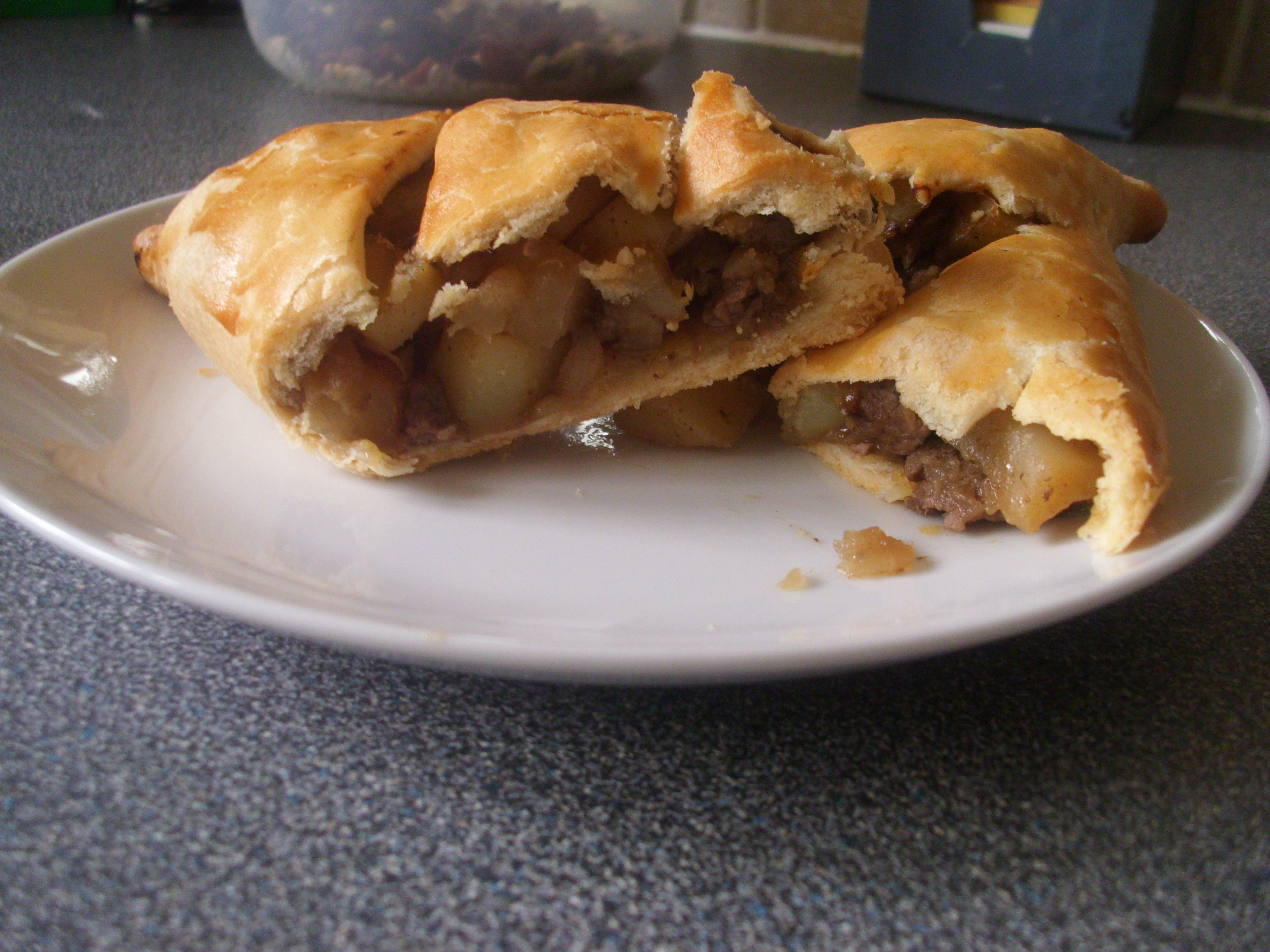
DSCI0414I have always loved meat in pastry, be it pies, puddings or pasties. I know it is not the healthiest of food but it is comfort food at its best. It also brings back fond memories of my childhood as my Grandma was a great pie maker, both sweet and savoury, and I would always make sure I had a place at her table when I knew she was making one.

I have tried making Cornish Pasties before but have not had a lot of success. This recipe is really easy though with a few shortcuts, like using ready-made pastry.

Originally the Cornish Pasty was a sort of fast food for miners, fishermen, farmers and children to take to work and school. The pastry would keep the filling warm until lunchtime. the filling would depend on the wealth of the family. The less wealthy families might omit the meat and just use the swede, potato and onion as filling.  Others might use the left over meats such as boiled ham.

Cornish Pasties seem to be making a comeback in popularity. There is a chain of bakeries all over the UK now that sell them, hot and inviting. The fillings may be far from traditional on occasion but there is no doubt that they are exceedingly good. We recently had one during our visit to Cambridge and my husband thought it was the best he had tasted until he tried these.

The recipe makes four medium-sized Pasties. I am sure they could be frozen before cooking if you want but don’t bank on freezing any after cooking as the smell and the taste will make them disappear like magic.

Cornish Pasties                             Makes 6

  • 200g turnip (or swede) peeled and cut into 1/2 inch pieces
  • 2 medium baking potatoes, peeled and cut into 1/2 inch pieces
  • salt and black pepper
  • 2 tbsp vegetable oil
  • 2 onions, finely chopped
  • 500g rump steak, all fat and sinews removed and cut into 3/4 inch pieces
  • 250 ml beef stock made from 1/2 a good-quality stock cube
  • 1 tbsp Worcestershire sauce
  • 500g chilled ready-made shortcrust pastry.
  • 1 egg beaten with a little milk to make the egg wash
  1. Heat half the oil in a large, heavy based frying pan and cook the onions for 5 minutes over a low to medium heat until softened but not coloured. Remove and set aside.
  2. Add the remaining oil and add the meat. Cook over a high heat for 3 – 4 minutes until browned all over. Add to the onions.
  3. Add the stock and Worcestershire sauce and boil rapidly until it reduces to about 2-3 tablespoons. Return the meat and onion to the pan and coat in the gravy. Simmer until there is no excess gravy visible.
  4. In the meantime, cook the potatoes and swede in two separate pans of boiling salted water until just tender. Drain and add to the meat. Allow to cool.
  5. Roll out the pastry until it is about the width of a pound coin.  Using a tea plate as a template, cut out 4 circles.  Spoon the mixture into the middle of each. Egg wash the edges and bring them together.  Crimp to seal. Chill for 30 minutes.
  6. Make two or three slashes in the top of each pasty to allow the air to escape. Brush with egg wash then bake for 20 minutes in an oven preheated to 200C/190C fan/gas 6 then turn down the oven to 180C/170C fan/gas 4 and bake for a further 20 minutes.
  7. Eat hot or cold.


This slideshow requires JavaScript.

Whole curried poussins stuffed with a keema rice stuffing – stunning!

22 Oct

This dish looks and tastes spectacular.  It is perfect for a dinner party as it can be prepared ahead up to the step 8 then lay the tomatoes on top and cook for 30 minutes to finish off before serving.  Remember though, that the Poussin do need to be marinated overnight before starting the cooking process.  The stuffing is made with some Keema Curry (see favourites) and I serve mine with Balti Potatoes (see favourites).  It is like having an Asian Sunday lunch.  Fantastic!

I remember the first time I made this.  My brother and his girlfriend were coming to stay for the weekend and we planned to go to a local Country Show on the Sunday.  I used a whole chicken for the recipe on this occasion and set the oven timer so it would cook while we were out, ready for the final stage on our return.  The wonderful smells met us at the door and the flavours were indescribable.  The only problem I had was carving the bird.  It was really tender and falling off the bone so dishing up was a bit messy.  It was my husband who suggested using Poussin instead of a whole chicken.  It worked perfectly.

Whole curried Poussin                                    Serves 2 (easily doubled)

  • 2 Poussin
  • 1 onion, chopped
  • 2 inch piece of root ginger, chopped
  • 4 fl oz natural yogurt
  • Juice of half lemon
  • 4 tbsp vegetable oil
  • 2 cloves garlic, finely chopped
  • salt to taste
  • small handful chopped fresh coriander
  • 1-2 tomatoes, thinly sliced
  • 8 oz Keema Curry
  • 8 oz plain cooked rice
  • 2 bay leaves
  • 1  brown cardamom
  • 2 cloves
  • 4 peppercorns
  • 1/2 tsp red chilli powder
  • 1 tsp ground coriander
  • 1/2 tsp cumin seeds
  • 1/2 tsp turmeric
  1. Blend the onion, ginger, yogurt and lemon juice in a processor until smooth.  Add a little water if necessary to make a thick pouring consistency.  Put the Poussin in a shallow dish and coat, inside and outside, with the yogurt mix.  Cover with cling film and leave in the fridge to marinade overnight.
  2. Grind the bay leaves, cardamom, cloves and peppercorns to a powder then mix with the Keema Curry and cooked rice to make the stuffing.  Refrigerate until ready to use.
  3. When the Poussin have marinated heat the oil in a large, ovenproof skillet with a lid.  Remove the Poussin from the marinade, reserving any marinade left over, and brown them on all sides.  This will take about 15 minutes.  Remove from the pan and cool, leaving the oil and any marinade in the pan for later.
  4. Preheat the oven to 200C/180C fan/gas 6.
  5. When the Poussin are cool, stuff with the rice stuffing.
  6. Add the garlic, chilli, coriander, cumin and turmeric to the pan with any remaining marinade and salt to taste.  Simmer gently then add about 1/4 pint of water slowly, to allow it to thicken between additions.
  7. Return the Poussin to the pan and spoon over the sauce.  Cover and bake in the oven for about 1 hour, basting every now and again.
  8. Remove the pan from the oven and sprinkle the Poussin with coriander.  Cover the breasts of the Poussin with the tomato slices.  Return the pan to the oven, uncovered, and continue to cook for a further 30 minutes or until the tomatoes have formed a dry crust.  Skim off any excess oil from the sauce and serve the Poussin with the sauce.

    This slideshow requires JavaScript.

Low fat Cottage Pie – really delicious

18 Oct

DSCI0415I seem to have been on a diet all my life and yet I never seem to get any thinner so I have. at long last, decided that I need to eat more healthily and make subtle changes that will see the weight come off gradually.  This recipe is one of many that I love in Judith Wills book ‘Top 200 low-fat recipes’.  Some of the recipe are my most loved dishes and I make them frequently but this was the first time I had tried this one.

So what makes this dish lower in fat and yet taste so good.  Firstly I think it must be because of the addition of some vegetables and baked beans. These not only bulk out the mince but give it a lovely flavour. As I used very leans minced beef this was essential.  She also uses herbs and flavourings to bring all the flavours together. I made a slight change in the herbs I used but it still tasted wonderful.  Finally she has replaced some of the potato with parsnip and has used light mayonnaise and low-fat fromage frais to mash them together instead of butter and cream. You would not believe how tasty the topping was. I think I might use this method of making mash in the future!

Well here is the recipe, only 400 calories for a generous portion.

Cottage pie                                     Serves 4

  • 1 tbsp groundnut oil
  • 400g extra lean minced beef
  • 1 large onion finely chopped
  • 1 stick celery, finely chopped
  • 1 large carrot, finely chopped
  • 200g can baked beans in tomato sauce, lightly mashed down
  • 1 tbsp tomato puree
  • 1 tsp dried oregano
  • 1 tsp Worcestershire sauce
  • salt and black pepper
  • 300 ml beef stock

For the topping

  • 400g old potatoes, peeled and cubed
  • 250g parsnips, peeled and cubed
  • 1 tbsp light mayonnaise
  • 2 tbsp low fat natural fromage frais
  • 1 tbsp grated Parmesan Cheese
  1. Preheat the oven to 180C/170C fan/gas 4.
  2. Heat the oil in a large non-stick frying pan and sauté the beef until browned, breaking it up as you go. Transfer to a bowl with a slotted spoon.  In the remaining fat sauté the onion, carrot and celery over a medium heat for about 10 minutes or until softened. Add a little water if it looks as though it is getting too dry.
  3. Return the meat to the pan and mix well. Add the beans, tomato puree, herbs, Worcestershire sauce, black pepper and stock.  Mix together really well then bring to the boil. Reduce the heat, cover and simmer for 45 minutes, stirring occasionally. Add a little water if it looks too dry and is sticking to the pan.
  4. Meanwhile make the topping. Bring a pan of salted water to the boil, add the potatoes and parsnips and simmer until tender. Drain. Mash them with the mayonnaise and fromage frais, season to taste them mash again. If the potato seems too dry add a little skimmed milk.
  5. when the meat is cooked, adjust seasoning if necessary then pour into a shallow oven dish.  Put the potato mix on top and smooth out then sprinkle with the cheese.
  6. Bake for 25 minutes or until golden brown and bubbling underneath.

This slideshow requires JavaScript.

Patatas Bravos – you don’t need to be brave to try these!

14 Oct

 Once again, the photos are rubbish but the flavour of these potatoes is absolutely divine.  I can see me making them over and over again.  They are a traditional Tapas dish but I think they will be a fantastic accompaniment to steak or lamb chops on the BBQ.  The dish translates as ‘brave potatoes’ due to the hot tomato sauce you drizzle over the roast potatoes.  I made mine for friends so I was economical with the chilli.  The result was quite mild but absolutely exquisite.  I think I will always make them like this as the heat does not overpower the delicate flavours in the rest of the dish.  Of course, those who like hot food can add more chilli but I would take care as the tomatoes readily absorb the heat and, once added, it is impossible to remove. 

The potatoes are supposed to be crisp.  I made mine in Fuerteventura and the oven is very peculiar.  I think if I had left them in there for another hour they would still not have crisped up.  In the end I served them golden but soft.  Once again, I prefered them like this and will try to replicate the texture when I next cook them in my oven back home.

The tomato sauce is so easy to make and has a great texture and incredible flavour.  I am going to try it as a pasta sauce, finished off with Parmesan cheese, when I get a chance.  I also think it would be great in a pasta bake, tossed with courgettes and red peppers that have been softened in a little olive oil, carefully mixed with cooked pasta shapes, poured into an ovenproof dish and topped with cheese before baking in the oven.  I might try this one out on my daughter-in-law.

Anyway, here is the recipe.

Patatas Bravos                                            Serves 4

  • 1 onion, roughly chopped
  • olive oil
  • 1 clove garlic, finely chopped
  • 1 tbsp tomato ketchup
  • 300g canned, chopped tomatoes
  • 2 tsps paprika (get the sweet variety if possible but definitely not smoked)
  • small pinch chilli (either dried and crumbled, flakes or powder)
  • 1kg / 2lbs potatoes (King Edwards or Maris Piper)
  1. Gently fry the onion in about 3 tbsp of olive oil until softened and not coloured.  Takes about 10 minutes.  Add all the other ingredients (except the potatoes).  Mix well, season with a little salt and bring to the boil.  Turn down the heat and simmer for 15 minutes.  Take off the heat and reserve until the potatoes are cooked.  You can refrigerate the sauce for 24 hours if you want to prepare ahead,
  2. In the meantime, peel and cut the potatoes into small cubes.  Put in a baking tray and drizzle with oil.  Season with salt then mix well so the potatoes are completely coated.  Bake in a hot oven, 200C/190C fan/gas 6, for 50 minutes or until the potatoes are a golden brown.
  3. Reheat the sauce .  Using a slotted spoon, transfer the potatoes to a serving dish and drizzle with the hot sauce.  Serve immediately.

    This slideshow requires JavaScript.

Tsatziki – you will never buy a ready made version again!

10 Oct

DSCI0363Every Greek will have their own recipe for Tsatziki. I have tried many myself but this version is absolutely delicious so my search has stopped here.  Tsatziki is a Greek dip made from Greek yogurt, mint, cucumber and garlic.  It is fantastic simply mopped up with pitta bread for an informal party or BBQ but is also a great accompaniment for meat and salad or with lamb, tomatoes and red onion in a luscious wrap.

When it comes to buying Greek yogurt I always buy the Total brand. Even in Greece this is the most popular unless it is homemade of course.

FAGE, who produce Total began with their first dairy shop in Athens, Greece, in 1926, which became known for its delicious, creamy, one-of-a-kind yoghurt. This dairy shop was established by the family of Athanassios Filippou, the grandfather of FAGE’s current Chief Executive Officer and Chairman of the Board.

In 1954, they created the first wholesale distribution network for yogurt in Greece. By 1964, they opened the company’s first yogurt production in Athens.

Until the mid-1970s, FAGE was involved primarily in the small-scale production and distribution of traditional Greek yogurt. Retail outlets typically sold yogurt as a commodity product in bulk quantities, and the consumer often was unaware of the manufacturer. In 1975, they were the first company to introduce branded yogurt products to the Greek market..

From their roots as a local Athens dairy producer, they expanded throughout Greece, as well as internationally. They began exporting yogurt to the United Kingdom in 1983, followed by Italy and many other countries. Exports to the United States started in 1998. Today, consumers can enjoy Total Greek yoghurt in over 35 different countries around the world.

Well, here is the recipe.

Tsatziki                              Makes 500g pot

  • 500g Greek natural yoghurt (I use Total)
  • 1/2 cucumber, peeled and grated
  • 1 tbsp white wine vinegar
  • 2 tbsp olive oil
  • 3 cloves garlic, crushed
  • 2 tbsp chopped fresh mint
  • salt and pepper
  1. Put the yoghurt in a small bowl.
  2. Squeeze the grated cucumber in small amounts to remove as much liquid as possible. Add to yoghurt.
  3. Add the wine vinegar, olive oil, garlic and chopped mint to the yoghurt and stir to mix well.
  4. Season lightly with a little salt and black pepper.
  5. Cover and chill until ready to serve.

This slideshow requires JavaScript.

Chicken with peppers and olives

24 Sep

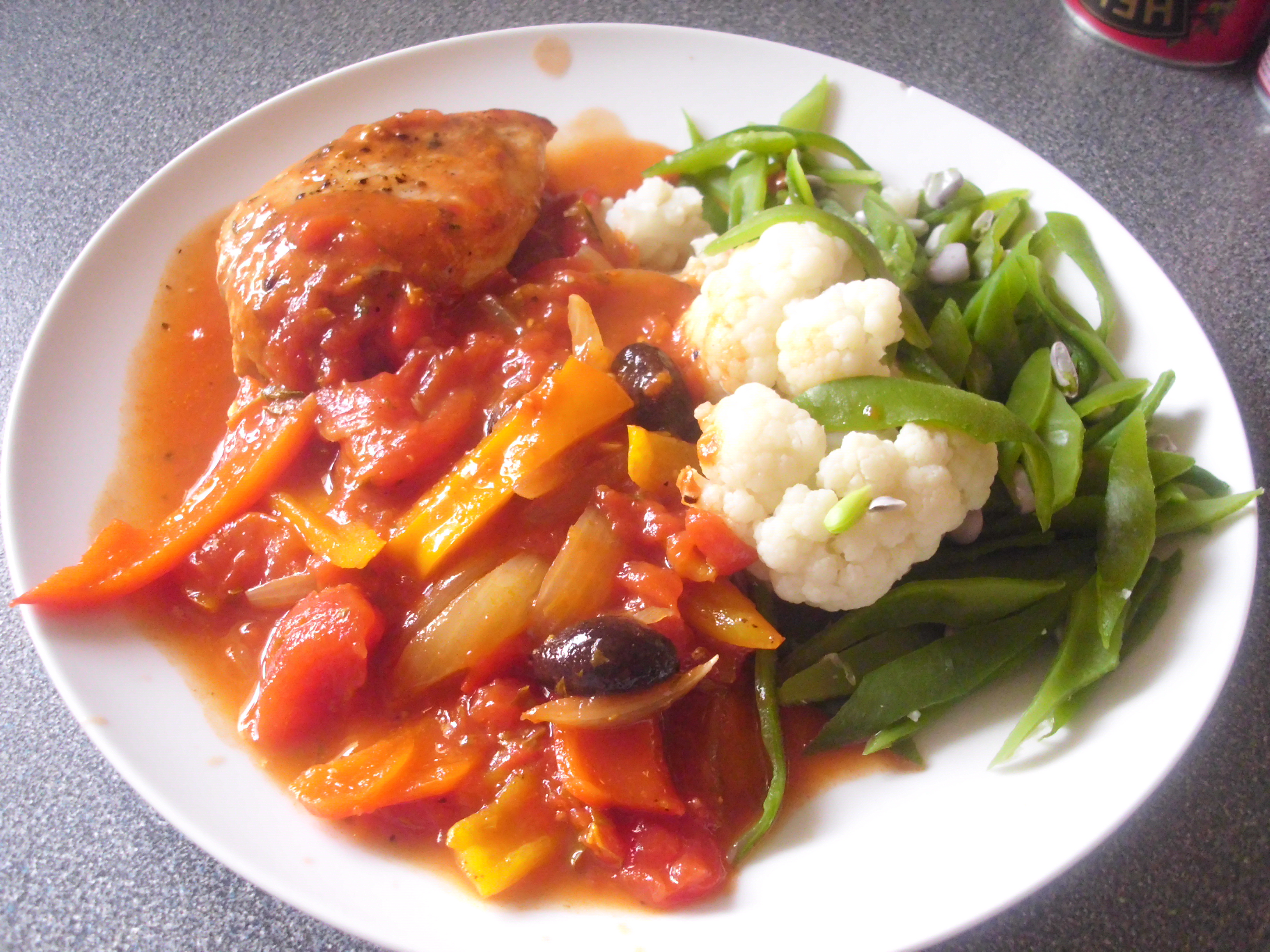
DSCI0299I am in the process of trying to use up food in the freezer so I can defrost it for the summer.  I also had some baby peppers left in a huge bag I bought recently so I decided to try to make a dish that combines the two.  The result was really tasty and healthy too, not bad for using up leftovers etc.  Here is a bit of chicken trivia.

  • According to the National Chicken Council, more than 1.25 Billion Chicken wing portions (more than 100 million pounds) were consumed on Super Bowl weekend in 2012.
  • In Great Britain over three-quarters of all waste from chicken production is used to generate electricity.
  • Our modern domesticated chickens are all descendants of the red jungle fowl of India and Southeast Asia. They have been domesticated for at least 4,000 years.
  • 4,000 years ago the Egyptians built brick incubators which could hold 10,000 chicks at a time.
  • In 1980 about 10% of a chicken’s weight was breast meat. In 2007 chickens were about 21% breast meat.
  • In 2007, 95 percent of commercial restaurants had chicken on the menu.
  • The average domestic laying hen lays 255 eggs per year.
  • It takes about 4 1/2 pounds of feed for a chicken to produce a dozen eggs.
  • In 1950 approximately 80% of chickens were ‘free range’, by 1980 only 1% were ‘free range.’ Today it is back up to 12%.
  • Broiler-fryers, roasters, stewing/baking hens, capons and Rock Cornish hens are all chickens.
  • Chicken skin colour varies from cream-colored to yellow. Skin color is a result of the type of feed eaten by the chicken, not a measure of nutritional value, flavor, tenderness or fat content. Colour preferences vary in different sections of the country, so growers use the type of feed which produces the desired colour. (Food reference.com)

Here is the recipe                                 Serves 2 but easily doubled and sauce is ok for 4

  • 1 tbsp vegetable oil
  • 2 chicken breasts, skinned and boned
  • 1 red and 1 yellow bell pepper, sliced
  • 1 onion, sliced
  • 1 x 400g can chopped tomatoes
  • 100 ml dry white wine
  • 250 ml chicken stock
  • 10 olives
  • salt & freshly ground black pepper
  1. Dry the chicken breasts and season on both sides with salt and black pepper.
  2. Heat a large frying pan or wok and add the oil.
  3. Fry the chicken in the oil until brown on both sides. Remove and set aside.
  4. in the same pan add the peppers and onion and stir fry for 4 minutes until starting to soften but not changing colour.
  5. Add the wine to the pan and cook for 2 minutes to burn off the alcohol, then add the tomatoes with a pinch of sugar and finally the chicken stock.  Mix and season well.
  6. Return the chicken and olives to the pan and simmer, uncovered, for 30 minutes or until the chicken is cooked through.
  7. Serve with vegetables and potatoes or pasta or rice.


This slideshow requires JavaScript.

Spice up your diet with this prawn and orange salad – fantastic!

20 Sep

 I am always looking out for good salad recipes.  I love most salads but sometimes they can get a bit boring.  My favourite salad of all time is my Asian Beef Salad but this one has to come a close second.  Every single component compliments the others and the explosion of flavours and textures is absolutely fantastic!  I would never have thought of adding oranges to a salad.  I am not sure why as I have used mangos and strawberries before now and know that fruit is great in salads.  The oranges are needed here to offset the spicy dressing, just as the creaminess of the avocado is needed to compliment the crunchy strong flavour of the red onion.  I know I will be having this over and over again in the summer.  The fact that there is no oil in it is an absolute bonus.

My Grandma used to tease us at Christmas by saying all we would be getting was an apple, an orange and a bag of nuts, just like she did as a child.  I thought she was joking but, in reality, oranges were given as Christmas gifts in England in Queen Victorias day.  I thought I would see what else I could find out about oranges.

  •  The orange is technically a hesperidum, a type of berry.
  • It was the first fresh fruit to bear a trademark. In 1919 the California Fruit Growers Exchange burned ‘Sunkist’ on their oranges. 
  • Oranges have been growing in Southeast Asia and China for approximately 4,000 years. According to historians, the orange made its way to Africa and the Middle East within the next five centuries and eventually came to Europe during the Arab occupancy of Spain (about 700 to 1400 AD). Explorers brought them to the New World in the 15th and 16th centuries, and by the 1800s, Florida had a burgeoning orange industry.  
  • By the 1890s, oranges and orange juice grew in popularity when it was discovered that the fruit contained a wealth of Vitamin C. Doctors knew that Vitamin C would help stave off a very menacing disease of that time – scurvy. 
  • Valencia oranges are most common. They do not have many seeds, and they tend to provide an excellent quality and quantity of juice. They are a later-season orange, so they fill the market when the navel oranges are not longer producing. 
  • Navel oranges are best for eating out of hand. They have no seeds, and their easy-to-peel fruit is better for eating immediately than for juicing. 
  • Seville oranges are highly valued as the primary ingredient in marmalade. Originally from Spain, Seville oranges are also grown in Florida.  
  • Blood oranges, also called Moro oranges, are prized for their beautiful rich red flesh as well as for their mildly berry-infused flavor. Their intense color comes from anthocyanin, an antioxidant that provides many cancer-fighting and aging health benefits.

Well, here is the recipe, courtesy of the May edition of Delicious, slightly adapted.  It has not been posted on their website but here is a link to their homepage so you can look it up later if you want to.

http://www.deliciousmagazine.co.uk/

Spicy Prawn and orange salad                                    Serves 2

  • 250g bag raw prawns
  • 1 little gem lettuce, leaves separated, washed and dried well
  • 1 large orange or 2 medium-sized ones
  • 1 ripe avocado stoned, peeled and sliced
  • 1 small or half a medium red onion, thinly sliced
  • 2 tbsp sweet chilli dipping sauce
  • Juice of 1 lime
  1. Boil a small pan of water.  When boiling, add the prawns, bring back to the boil and cook for 1 minute or until the prawns are pink and cooked through.  Be careful not to overcook or they will go hard.  Drain and allow to go cold.
  2. Divide the lettuce leaves on two plates so that they can hold the rest of the ingredients.
  3. Place the orange(s) on a cutting board and with a sharp knife, cut off the top, bottom and sides so that all the skin and pith has been removed.  Slice the flesh and place on the top of the lettuce.
  4. Divide the avocado, red onion and cold prawns between the two plates.
  5. Mix the dipping sauce with the lime juice and drizzle over the salad.  Serve immediately.

    This slideshow requires JavaScript.

Tuna pasta – my daughter’s favourite.

12 Sep

I have been making this pasta dish for at least 35 years.  I made it up when the children were small and money was short.  I think the first time I ever made it was over the Christmas holiday.  In those days the shops would close early on Christmas Eve and not open again until after Boxing Day.  Sometimes this meant they were not open for 5 days, as they never opened on a Sunday or a Bank Holiday.  Imagine the outcry if that happened today!  I remember having to plan my food shopping so we didn’t run out and getting up at the crack of dawn to queue up for the bread.  This recipe came out of desperation I think.  I had run out of almost everything except for a few store cupboard ingredients and some bits and bobs of vegetables.  My kids absolutely loved it and still do to this day.  Whenever I ask my daughter what she wants me to cook for her she nearly always asks for Tuna pasta.  When I made her some at the weekend I thought I would check to make sure it was on the blog and could not believe it wasn’t there.  So, today I will put that right and hope she prints off the recipe so she can continue making it when I am no longer here.

Talking about Christmas brings back lots of happy memories.  I remember how excited I used to get as a child.  I would spend hours looking up into the sky to see if Santa was coming yet.  My Mum used to say he would not come until I was asleep.  Did she not know how impossible that was!  I remember neighbours coming round for a glass of sherry and how happy and warm the house was, filled with wonderful smells.  Mum would put the turkey on before she went to bed and cook it overnight, Jamie Oliver would have a fit!  I used to share a bedroom with my three little brothers.  One Christmas I woke at about two in the morning and found Santa had been.  I woke my brother Jeff up and asked him if he wanted me to open his presents.  After I had opened them all and eaten his chocolate santa I went back to sleep so I could open mine in the morning.  How awful was that!  My Mum was furious and made Jeff open my presents for me.  Needless to say I never did it again!  We used to have lots of Christmas parties in those days.  My Dad was a bus driver and Trent Buses had their Christmas Party in a big hotel in Derby.  I entered a competition at one of the parties to see who had the most outrageous laugh.  I won, which will come as no surprise to those who know me.  The prize was a tube of Polos, and I was over the moon!  How times have changed.

We had some great Christmases when the kids were small too.  I remember one year my brother-in-law dropping sweets down the stairs and pretending they had fallen out of Santa’s sack.  We never had much money but we always splashed out at Christmas, loads of goodies and a cupboard full of booze.  All the neighbours would go to each others houses for a drink in the morning.  It’s a wonder I was ever sober enough to make the Christmas dinner.  Mind you, one year I did forget to make the gravy!

All this reminiscing makes me sad that we have lost some of that community spirit.  Next Christmas I am going to make sure I ask the neighbours in for a drink.  It’s never too late to improve things.

Anyway, enough of the past, here is the recipe.  It is one of those that do not have exact quantities.  I tend to just guess them by the handful so it will be difficult to be exact.  I hope it turns out how it should.  My Grandson Hayden has it cold as a pasta salad, so don’t worry if you have left overs.  Or you could reheat in the microwave the following day.

Tuna pasta                                             Serves 4 

  • 2 tbsp vegetable oil
  • 200g dried pasta shapes eg fusilli
  • 1 onion, finely chopped
  • 1 red pepper, deseeded and cut into small pieces
  • 200g mushrooms, sliced
  • 2 tbsp plain flour
  • 500 ml whole milk
  • 100g frozen peas
  • 100g frozen sweetcorn kernels
  • 2 tins tuna, drained well
  1. Cook the pasta in boiling salted water until just tender.  Drain well.
  2. Meanwhile, heat the oil in a large pan and gently fry the onion and pepper until soft but not coloured, about 5-8 minutes.
  3. Add the mushrooms and cook for a couple of minutes more.
  4. Add the flour and mix well with the vegetables.  Remove from the heat and slowly add the milk, making sure it has absorbed into the flour mix between each addition.  Return to the heat and stir until the sauce has thickened.
  5. Add the peas, sweetcorn, and pasta and crumble in the tuna in big chunks.
  6. Mix well.  If it appears to be too thick add a little extra milk.  Reheat until all the ingredients are hot.  Check for seasoning and, if necessary add a little salt and black pepper.  Serve.

    This slideshow requires JavaScript.