Archive | My favourite recipes RSS feed for this section

Paella for a friend.

12 Feb

A friend has asked me to make a Paella dish that does not contain seafood.  I love Paella and often choose it when we are eating out on holiday in Spain.  It can be hit or miss though and, when watching cooking demonstrations in Fuerteventura, I can see why!  It seems adding the ingredients is an exact science.  I am quite nervous that this is going to turn out like a sticky mass.  Still, always up for a challenge!! The first time I had Paella was in 1991, cooked on a wooden fire, on the beach in Nerja.  The cook, Chiringuito Ayo, has been making massive dishes of paella in this way for over 40 years.  Chiringuito is quite famous in Nerja.  When he was a boy, in 1959, he was playing with some friends from his village, Maro, when they climbed through a small hole and discovered the famous Caves of Nerja.  Imagine their surprise when they were confronted with this! The dish originated in the Valentia Region of Spain and is typically made in a large, shallow pan called a paellera.  Making paella is often a man’s activity in Spain.  I suppose this equates to barbecues in the UK, as they make it outdoors on an open fire made of orange and pine wood.  The one thing that appears to come through from my research, is that the recipe is adapted to suit personal taste, with the exception of a few key ingredients.  The Spanish make it look so easy!  I remember this chef doing a cooking demonstration in our hotel once.  The paella was delicious! Well, I’ve dusted off my paella pan that I bought in 1991 and have never used, and here goes.  I have chosen a variety of meats for this recipe.  If you choose to make it, you can add or omit, according to your own taste.  You can also add raw prawns and fresh mussels to make a mixed paella, but leave these until the last 5 minutes of cooking or they will be overcooked.  You will need special rice for this and it must be short grain.  I could not find Paella Rice so I used Carnaroli.  I made mine on the barbecue.  You will need a kettle barbecue and we let the coals burn for 15 minutes before we started cooking (you don’t have to let the coals go grey). The recipe below is for those who do not have a barbecue, just keep the same cooking times if you do! Meat Paella   Serves 4 (hungry people)

  • 12 oz (350g) rice
  • 2 tbsp olive oil
  • 4 chicken thighs, bone in, cut in half
  • 8 oz (225g) sirloin steak, fat removed, cut into 1 inch cubes
  • 8 oz (225g) tenderloin pork, fat removed, cut into 1 inch cubes
  • 4 oz (110g) raw chorizo sausage, cut into 1/2 inch dice
  • 1 large onion, peeled and roughly chopped
  • 1 red pepper, deseeded and cut into 1/2 inch pieces
  • 2 cloves garlic, peeled and crushed
  • 1 heaped tsp paprika
  • 1/4 level tsp cayenne pepper
  • 1/2 level tsp saffron strands
  • 8 oz (225g) ripe tomatoes, skinned and roughly diced
  • 20z (50g) frozen peas
  • Salt and pepper
  • 1 lemon, cut into wedges to garnish
  1. Prepare everything as per ingredient list before you start making the paella, you will not have time to mess about between each step!
  2. Heat the oil in the pan over a fairly high heat.  Season the chicken and add to pan, saute on all sides until golden brown.  Remove and set aside.  Do the same with the beef and lastly the pork.
  3. Next, add the onion, pepper and chorizo and fry these over a medium heat for 6-8 minutes, or until they are browning at the edges.  Add the garlic, paprika, cayenne and saffron and cook for another minute, making sure the garlic does not burn.  Return the meat to the pan, followed by the tomatoes, plenty of seasoning and 2 pints (1.2 litres) of boiling water.  Bring everything to a gentle simmer, turn down the heat and cook, uncovered, for 10 minutes.
  4. Push the meat to the edges of the pan and pour the rice into the centre.  Bring everything back to the boil, give it a stir so all the rice is covered by liquid, and simmer, uncovered for about 10 minutes. Shake the pan occasionally to distribute the rice and make sure it is evenly cooked
  5. Add the peas and continue to simmer for 10 minutes until the moisture has been absorbed.  Remove from the heat and cover with a clean tea towel for 5 minutes to absorb the steam.
  6. Serve with lemon wedges.

    This slideshow requires JavaScript.

Quorn Chicken and Tarragon Pie – low fat and tasty! Or replace the Quorn with chicken. Yum!

30 Jan

I feel like I have been neglecting my vegetarian friends so here is a Quorn recipe I make for my daughter-in-law Tracy.  Just so my son and daughter are not left out I replace the Quorn with chicken.  I have been trying to make Quorn recipes in earnest for the last three years, since I retired and decided to cook for the kids once a week.  Now I feel I am on a mission.  Quorn have actually made a great cookbook and also have recipes on-line but I still like to experiment.  This recipe is easy to make and really tasty.  It is perfect for a vegetarian of course, but also is great for anyone on a diet.  I’m not sure how it fits with the Slimming World diet but I seem to remember Quorn is free on Green days.  Perhaps my friend Ali could let me know? 

Did you know that Quorn was actually invented to help solve world hunger?  In the early 1960’s there was a predicted population growth that threatened food and protein supplies.  Scientists were trying to find a solution and even looked to making protein out of coal and saw dust!  In 1965, Lord Rank, who owned a Company that includes the Hovis brand, decided to put this as a challenge to his Research and Development department.  In 1967 an organism was found occurring naturally in the soil in a field in Marlow, Buckinghamshire.  I cannot think for the life of me why they would be looking there!!  There was obviously a lot of work to do to make this into a mycoprotein, turn it into something edible, pass all the strict food laws and make it in sufficient quantities that they could supply demand.  It wasn’t until 1985 that the first retail product was launched, a vegetable pie.  Research continued and in 1990 the first Quorn branded cooking product was launched, Quorn cooking pieces.  Today Quorn make over a 100 different products in their ready meals section, as well as a full range of products to enable customers to make their own meals up.

Quorn itself is almost flavorless so when you make a recipe you have to make sure there is plenty of flavour in the other ingredients as the Quorn will take this on.  Curries, chillies and pasta sauces are obvious excellent choices and I have experimented successfully with many of these.  However, Tracy is pregnant at the moment and curries is definitely off her food list.  Hence the pie.  I hope you give it a try.  Here is the recipe.  If, like me, you are not too keen on Quorn, replace it with cooked chicken, its lovely.

Quorn chicken and tarragon pie         Serves 2

  • 1 tbsp olive oil
  • 150g Quorn chicken style pieces
  • 1 onion, finely chopped
  • 1 tbsp butter
  • 2 tbsp plain flour
  • 3/4 pint milk
  • 1 tsp dried tarragon
  • 2 small handfuls of frozen peas
  • Salt and pepper
  • 500g potatoes (suitable for mashing)
  • knob of butter
  • a little extra milk
  1. Fry the onion in the oil over a low heat for about 10 minutes until it is softened but not coloured.  Add the Quorn pieces, stir around and cook for another 3 minutes.  Remove from the heat.
  2. In a separate pan, make the tarragon sauce.  Melt the butter then add the flour.  Mix well and cook for a minute.  Very slowly, to avoid curdling, add the milk.  When all the milk has been added stir in the tarragon and continue to cook over a medium heat until the sauce thickens.  Season to taste.
  3. Add the sauce to the Quorn mix and stir in the peas.  Cook over a low heat for about 10 minutes then place the mix evenly in an ovenproof dish.
  4. Meanwhile,cook the potatoes in salted water.  When tender, mash with the butter and milk to make a creamy consistency.  Top the Quorn mix with the potato then cook in a preheated oven, 190C/180C fan/Gas 4, for 25-30 minutes or until the potato is browned on top and the base is bubbling. 

    This slideshow requires JavaScript.

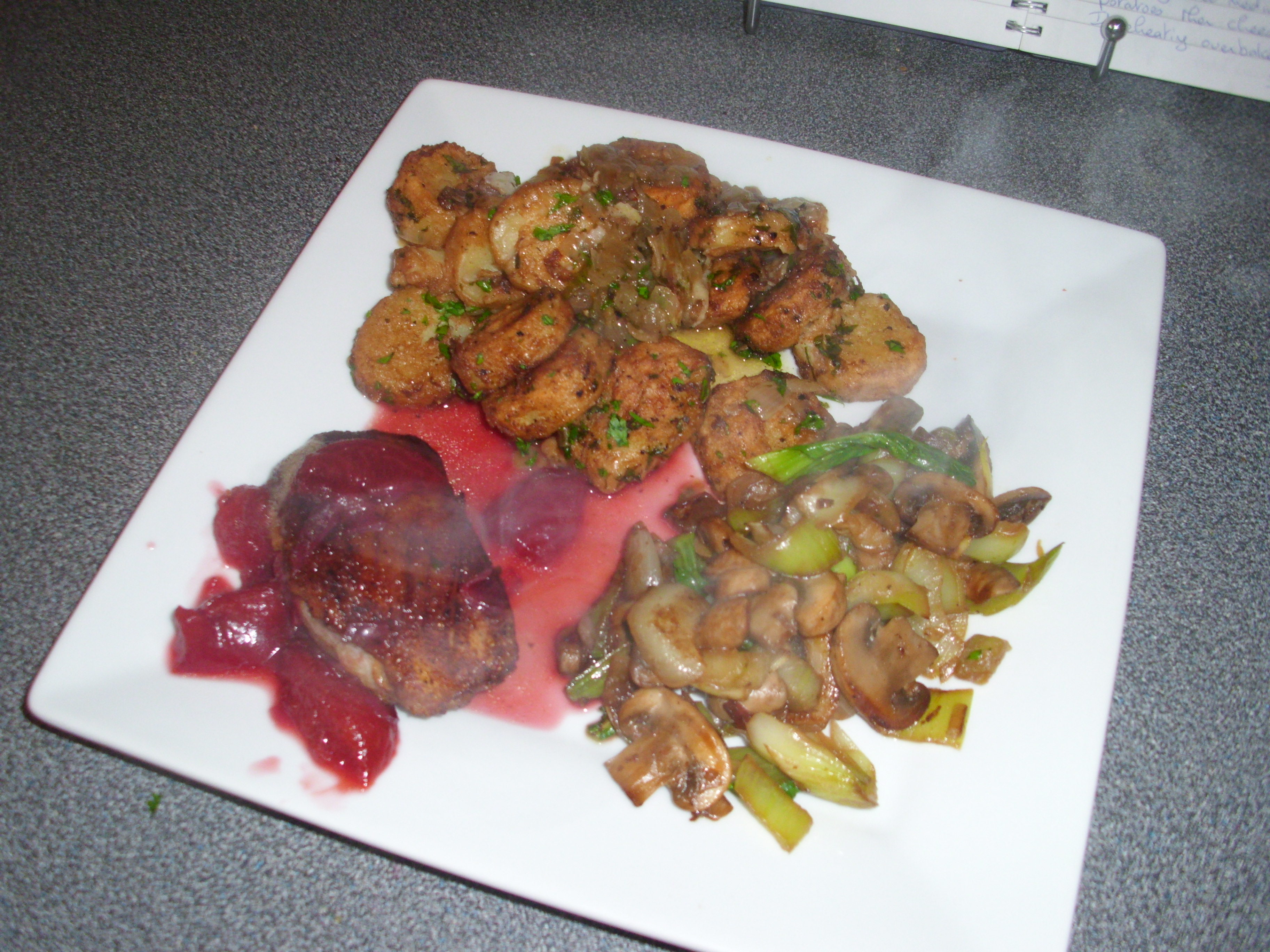
Roast duck breast with plum sauce. Gorgeous!

18 Jan

Duck is one of our favourite foods but is quite expensive.  Now there is just the two of us at home, I hardly ever buy a whole duck.  Duck breasts may be a bit more expensive but there is a lot less waste and they are so easy to cook.  This recipe would work equally well with duck legs, I just can’t be bothered to fiddle about with getting the meat off the bones.  I remember when I first made this, we ate it by candlelight, and had a really romantic evening.  Not so last night.  I love a glass of wine when I am cooking and somehow, in the middle of making this, found myself trying to do Irish dancing in the kitchen while listening to the Corrs.  Those that know me will not find this unusual!  Some things never change, thank goodness!

The word duck comes from the old english word duce, which translates as diver.  Ducks, therefore, got the name because of the way they feed by upending and diving for their food.  Most people who read this blog will know all about ducks but, one interesting piece of information I didn’t know, was that only females of the dabbling ducks quack.  Just think of all those children that have been told the noise ducks make is quack!  Mind you, I’m not sure they would grasp the reality ie that they may whistle, yodel, coo or grunt!  I can’t ever remember hearing a duck grunt.  Perhaps I’ve only ever heard female dabbling ducks!

One of my favourite recipes for duck is Peking Duck.  I admit to being put off a bit when I saw them all hanging in the window of a Chinese Takeaway, in China Town, London.  I don’t think it was necessarily the hanging ducks that put me off, but the bright orange colour and the other pieces of meat hanging with them.  I don’t know what these were but have a sneaky suspicion they were intestines of some kind.  Yuk! I may be meat eater but there are some things I draw the line at.

Here is the recipe.  I’ve had it so long I can’t remember where I first found it, most likely one of my cooking journals that I subscribe to, although I can’t find a link to give you.   If you make too much sauce, freeze the rest for another day.

Roasted Duck Breast with Plum Sauce                  Serves 2

  • 2 duck breasts
  • 1 sprig of thyme
  • 1 star anise
  • 25g/1oz unsalted butter (it is less likely to burn than salted)

For the Plum Sauce

  • 1 shallot, finely chopped
  • 1 tbsp olive oil
  • 250g/10 oz dark plums, halved, stoned and cut into wedges
  • 50g/2 oz light brown, soft sugar
  • 50ml/2 fl oz red wine
  • 250ml/1/2 pt beef stock
  1. Heat the oven to 180C/160C fan/gas 4.
  2. Firstly make the sauce by frying the shallot in the oil for about 5 minutes or until softened but not coloured.  Add the plums and sugar, stir for a few minutes until the sugar has dissolved.  Add the red wine and stock then simmer for 15 – 30 minutes, stirring occasionally, until the plums are softened and the sauce has thickened.  Remove from heat and keep at room temperature.  Can be made up to one day in advance.
  3.  Dry the duck breasts well then score the skin and season well.  Fry, skin side down in a non-stick, ovenproof pan, for about 6-7 minutes or until the skin is browned.  Turn the breasts over, add the thyme, star anise and butter.  When the butter has melted, baste the duck then transfer the pan to the oven for 5-6 minutes if you like the duck link, or 10-12 minutes for well done.  Remove from the oven, baste and allow to rest for 5 minutes.
  4. I served mine with stir fried mushrooms, onions and pak choy and potatoes in shirts (recipe in next post) but this would be equally as good served thinly sliced, topped with sauce and accompanied by mashed potatoes and a green vegetable such as broccoli.

    This slideshow requires JavaScript.

Fancied an alternative to Sunday roast. Chicken in cider should do it!

30 Nov

  Years ago, I was fortunate enough yto accompany the French school trips to Normandy, run by my husband’s school.  I remember these with fondness, the children were so excited, for most it was their first trip abroad without their parents and, without exception, they were so good!  They were even complimented on one occasion, on the ferry over to Caen, by a lovely old lady who said they were angels.  I had to agree!

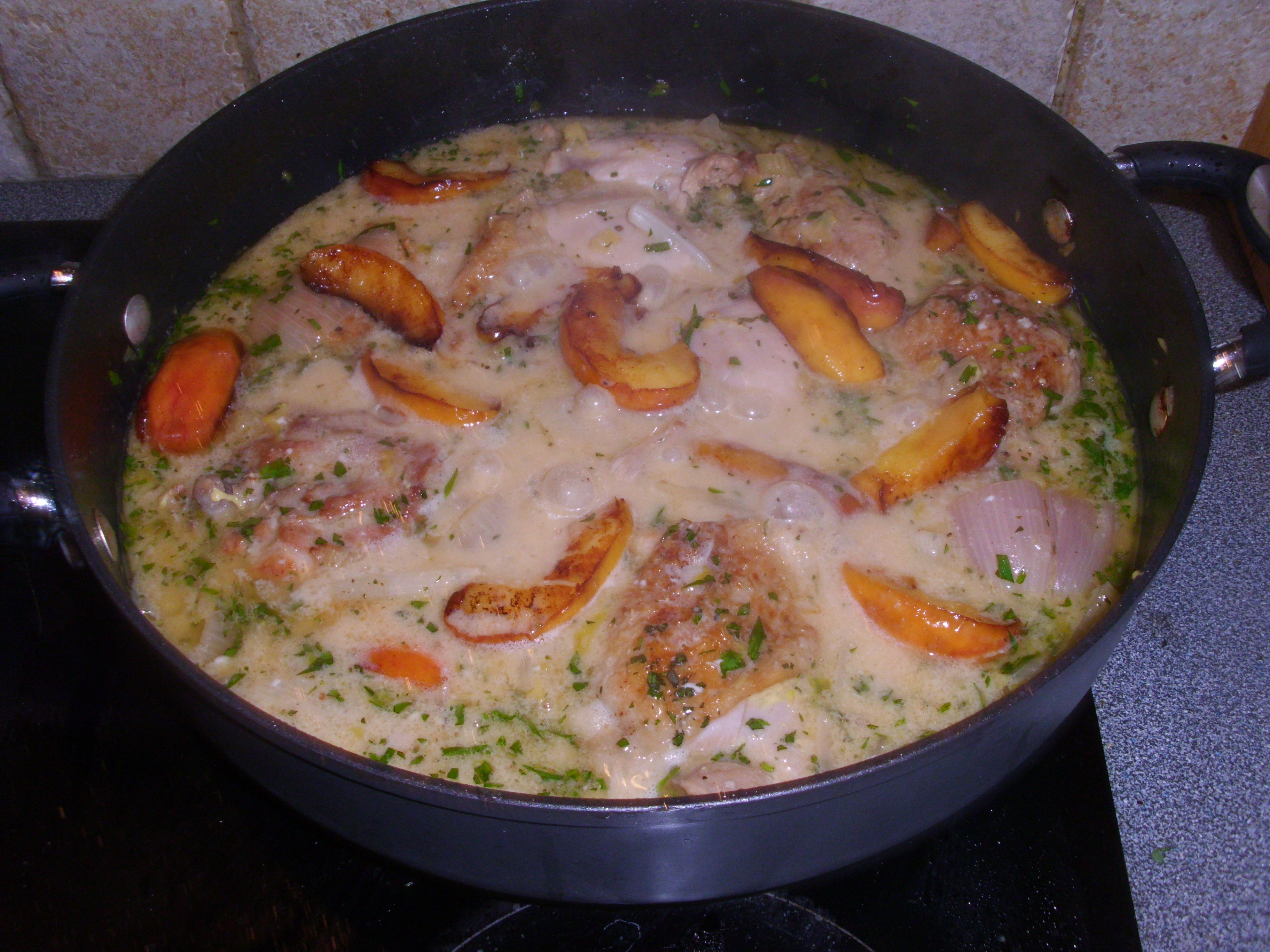
During these trips we had some fantastic French cuisine, all rustic and easy to prepare, to cater for the large numbers.  One meal I remember well was when we had chicken cooked in cider and served with apples.  I know it sounds strange but please don’t be put off, it was absolutely delicious!  I have made a similar recipe many times using pork chops but thought I would have a go at one with chicken.  I have found a host of similar recipes, so I have used these as a base and adapted it to suit our taste.  Before we get to the recipe, here is a bit of information about Normandy that many of you will know and, hopefully, none of us will forget!

Normandy is on the north coast of France, with beaches on the English Channel, and played an important part in the World War II.  The Germans had marched through Europe, occupying the countries in its path, including France, and the English Channel was the only thing stopping them from invading England.  In 1944, June 6th, Operation Overlord took place, where Allied troops, including armies from the United Kingdom, Canada and USA, landed on the Normandy beaches, and worked with the French Resistance to fight the Germans and regain control of France.  Those who have seen ‘Saving Private Ryan’ will have a good idea how difficult this mission was.  I remember on one school trip we visited the American War Cemetery.  There was an old gentleman there who was part of the D Day Landings.  His family asked him to tell them what had happened and for a few painful minutes the man could not speak, he was so overcome with grief.  He then recounted how he had watched his brother die and some of his friends, including the best man at his wedding.  By the time he had finished he was sobbing, as were all of us that were listening.  I don’t think those children will ever forget, I know I won’t.

On a lighter side, Normandy is famous for apples and the production of cider and Calvados, an apple brandy.  They use these in many of their recipes.  So, onto the recipe for today.  I’ve included a slide show at the end to show the various steps.  I served ours with boiled new potatoes and cabbage.  It really was lovely.  Hope you give it a try.

Chicken in cider with apples

  • 2 oz unsalted butter
  • 8 chicken thighs
  • 8 shallots
  • 2 sticks celery
  • 300ml (1/2 pint) chicken stock
  • 300 ml (1/2 pint) dry cider (if using a 440ml can this will leave a glass of cider in the can for the cook!)
  • 2 apples, cored and cut into wedges
  • 2 tsp cornflour
  • 5 tbsp full fat Greek yogurt (low fat will curdle)
  • 2 tbsp Dijon mustard
  • 1 tbsp chopped fresh tarragon
  1. Heat the oven to 190C/170C fan/gas 5.
  2. Heat half the butter in a large ovenproof casserole over a high heat and fry the chicken for 5 minutes on each side or until the thighs are brown all over.  Keep turning to make sure they don’t burn.  Season well then add the shallots and celery.  Cook for a few minutes and add the stock and cider, bring to the boil, cover and cook in oven for about 40 minutes or until the chicken is cooked.
  3. Meanwhile, melt the rest of the butter in a small pan and fry the apples for about a minute on each side or until lightly browned.  Remove and reserve.
  4. Take the casserole out of the oven and place over a medium heat on the hob.  Mix the cornflour with the yogurt and add to the casserole, stirring, followed by the tarragon, mustard and apples.  Heat through for a couple of minutes then serve.

NB  You can freeze this when cooled so its useful for getting ahead for a dinner party.

This slideshow requires JavaScript.