Archive | My favourite recipes RSS feed for this section

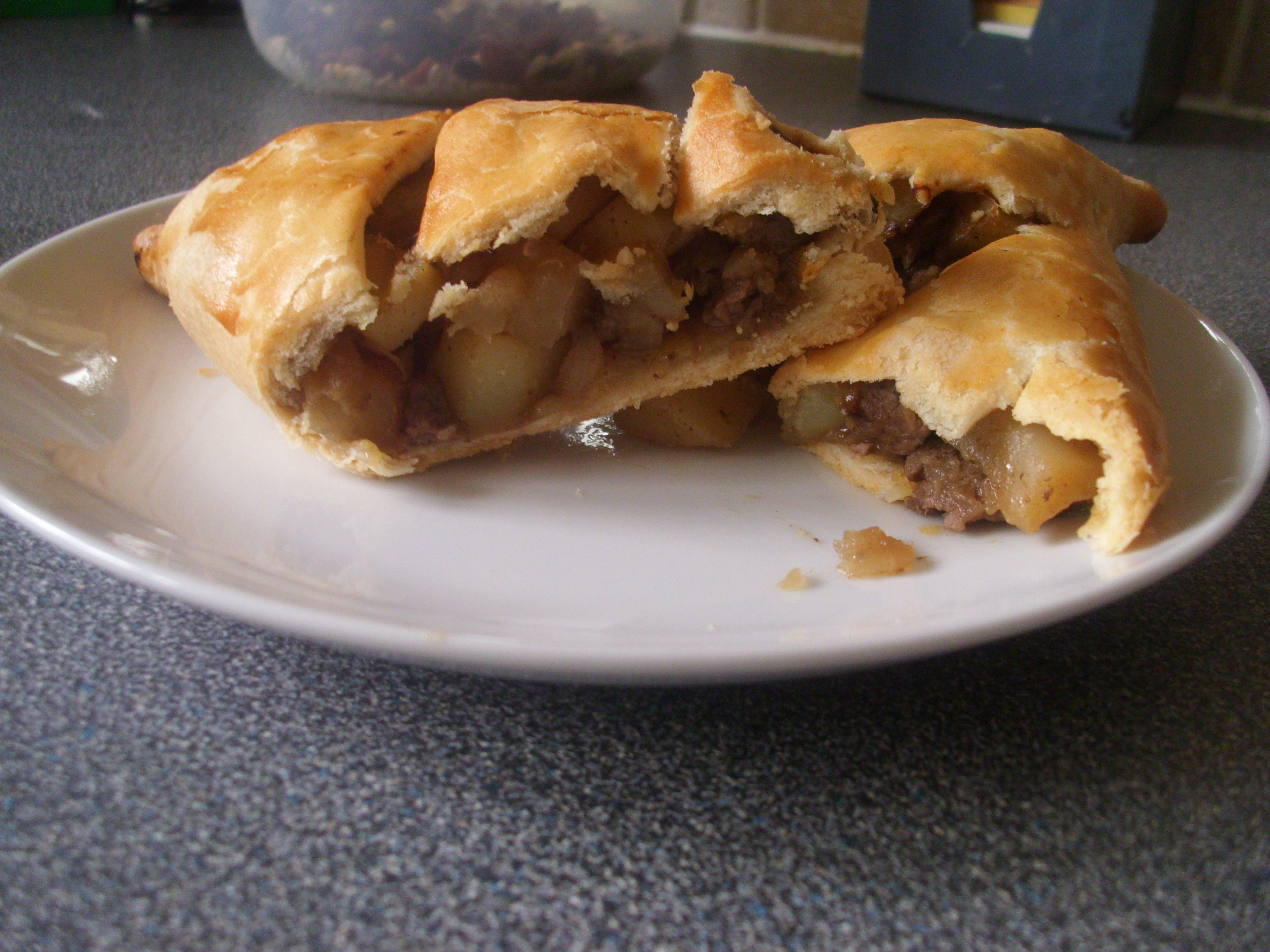
Cornish Pasties – absolutely scrummy!

3 Nov

DSCI0414I have always loved meat in pastry, be it pies, puddings or pasties. I know it is not the healthiest of food but it is comfort food at its best. It also brings back fond memories of my childhood as my Grandma was a great pie maker, both sweet and savoury, and I would always make sure I had a place at her table when I knew she was making one.

I have tried making Cornish Pasties before but have not had a lot of success. This recipe is really easy though with a few shortcuts, like using ready-made pastry.

Originally the Cornish Pasty was a sort of fast food for miners, fishermen, farmers and children to take to work and school. The pastry would keep the filling warm until lunchtime. the filling would depend on the wealth of the family. The less wealthy families might omit the meat and just use the swede, potato and onion as filling.  Others might use the left over meats such as boiled ham.

Cornish Pasties seem to be making a comeback in popularity. There is a chain of bakeries all over the UK now that sell them, hot and inviting. The fillings may be far from traditional on occasion but there is no doubt that they are exceedingly good. We recently had one during our visit to Cambridge and my husband thought it was the best he had tasted until he tried these.

The recipe makes four medium-sized Pasties. I am sure they could be frozen before cooking if you want but don’t bank on freezing any after cooking as the smell and the taste will make them disappear like magic.

Cornish Pasties                             Makes 6

  • 200g turnip (or swede) peeled and cut into 1/2 inch pieces
  • 2 medium baking potatoes, peeled and cut into 1/2 inch pieces
  • salt and black pepper
  • 2 tbsp vegetable oil
  • 2 onions, finely chopped
  • 500g rump steak, all fat and sinews removed and cut into 3/4 inch pieces
  • 250 ml beef stock made from 1/2 a good-quality stock cube
  • 1 tbsp Worcestershire sauce
  • 500g chilled ready-made shortcrust pastry.
  • 1 egg beaten with a little milk to make the egg wash
  1. Heat half the oil in a large, heavy based frying pan and cook the onions for 5 minutes over a low to medium heat until softened but not coloured. Remove and set aside.
  2. Add the remaining oil and add the meat. Cook over a high heat for 3 – 4 minutes until browned all over. Add to the onions.
  3. Add the stock and Worcestershire sauce and boil rapidly until it reduces to about 2-3 tablespoons. Return the meat and onion to the pan and coat in the gravy. Simmer until there is no excess gravy visible.
  4. In the meantime, cook the potatoes and swede in two separate pans of boiling salted water until just tender. Drain and add to the meat. Allow to cool.
  5. Roll out the pastry until it is about the width of a pound coin.  Using a tea plate as a template, cut out 4 circles.  Spoon the mixture into the middle of each. Egg wash the edges and bring them together.  Crimp to seal. Chill for 30 minutes.
  6. Make two or three slashes in the top of each pasty to allow the air to escape. Brush with egg wash then bake for 20 minutes in an oven preheated to 200C/190C fan/gas 6 then turn down the oven to 180C/170C fan/gas 4 and bake for a further 20 minutes.
  7. Eat hot or cold.


This slideshow requires JavaScript.

Patatas Bravos – you don’t need to be brave to try these!

14 Oct

 Once again, the photos are rubbish but the flavour of these potatoes is absolutely divine.  I can see me making them over and over again.  They are a traditional Tapas dish but I think they will be a fantastic accompaniment to steak or lamb chops on the BBQ.  The dish translates as ‘brave potatoes’ due to the hot tomato sauce you drizzle over the roast potatoes.  I made mine for friends so I was economical with the chilli.  The result was quite mild but absolutely exquisite.  I think I will always make them like this as the heat does not overpower the delicate flavours in the rest of the dish.  Of course, those who like hot food can add more chilli but I would take care as the tomatoes readily absorb the heat and, once added, it is impossible to remove. 

The potatoes are supposed to be crisp.  I made mine in Fuerteventura and the oven is very peculiar.  I think if I had left them in there for another hour they would still not have crisped up.  In the end I served them golden but soft.  Once again, I prefered them like this and will try to replicate the texture when I next cook them in my oven back home.

The tomato sauce is so easy to make and has a great texture and incredible flavour.  I am going to try it as a pasta sauce, finished off with Parmesan cheese, when I get a chance.  I also think it would be great in a pasta bake, tossed with courgettes and red peppers that have been softened in a little olive oil, carefully mixed with cooked pasta shapes, poured into an ovenproof dish and topped with cheese before baking in the oven.  I might try this one out on my daughter-in-law.

Anyway, here is the recipe.

Patatas Bravos                                            Serves 4

  • 1 onion, roughly chopped
  • olive oil
  • 1 clove garlic, finely chopped
  • 1 tbsp tomato ketchup
  • 300g canned, chopped tomatoes
  • 2 tsps paprika (get the sweet variety if possible but definitely not smoked)
  • small pinch chilli (either dried and crumbled, flakes or powder)
  • 1kg / 2lbs potatoes (King Edwards or Maris Piper)
  1. Gently fry the onion in about 3 tbsp of olive oil until softened and not coloured.  Takes about 10 minutes.  Add all the other ingredients (except the potatoes).  Mix well, season with a little salt and bring to the boil.  Turn down the heat and simmer for 15 minutes.  Take off the heat and reserve until the potatoes are cooked.  You can refrigerate the sauce for 24 hours if you want to prepare ahead,
  2. In the meantime, peel and cut the potatoes into small cubes.  Put in a baking tray and drizzle with oil.  Season with salt then mix well so the potatoes are completely coated.  Bake in a hot oven, 200C/190C fan/gas 6, for 50 minutes or until the potatoes are a golden brown.
  3. Reheat the sauce .  Using a slotted spoon, transfer the potatoes to a serving dish and drizzle with the hot sauce.  Serve immediately.

    This slideshow requires JavaScript.

Tsatziki – you will never buy a ready made version again!

10 Oct

DSCI0363Every Greek will have their own recipe for Tsatziki. I have tried many myself but this version is absolutely delicious so my search has stopped here.  Tsatziki is a Greek dip made from Greek yogurt, mint, cucumber and garlic.  It is fantastic simply mopped up with pitta bread for an informal party or BBQ but is also a great accompaniment for meat and salad or with lamb, tomatoes and red onion in a luscious wrap.

When it comes to buying Greek yogurt I always buy the Total brand. Even in Greece this is the most popular unless it is homemade of course.

FAGE, who produce Total began with their first dairy shop in Athens, Greece, in 1926, which became known for its delicious, creamy, one-of-a-kind yoghurt. This dairy shop was established by the family of Athanassios Filippou, the grandfather of FAGE’s current Chief Executive Officer and Chairman of the Board.

In 1954, they created the first wholesale distribution network for yogurt in Greece. By 1964, they opened the company’s first yogurt production in Athens.

Until the mid-1970s, FAGE was involved primarily in the small-scale production and distribution of traditional Greek yogurt. Retail outlets typically sold yogurt as a commodity product in bulk quantities, and the consumer often was unaware of the manufacturer. In 1975, they were the first company to introduce branded yogurt products to the Greek market..

From their roots as a local Athens dairy producer, they expanded throughout Greece, as well as internationally. They began exporting yogurt to the United Kingdom in 1983, followed by Italy and many other countries. Exports to the United States started in 1998. Today, consumers can enjoy Total Greek yoghurt in over 35 different countries around the world.

Well, here is the recipe.

Tsatziki                              Makes 500g pot

  • 500g Greek natural yoghurt (I use Total)
  • 1/2 cucumber, peeled and grated
  • 1 tbsp white wine vinegar
  • 2 tbsp olive oil
  • 3 cloves garlic, crushed
  • 2 tbsp chopped fresh mint
  • salt and pepper
  1. Put the yoghurt in a small bowl.
  2. Squeeze the grated cucumber in small amounts to remove as much liquid as possible. Add to yoghurt.
  3. Add the wine vinegar, olive oil, garlic and chopped mint to the yoghurt and stir to mix well.
  4. Season lightly with a little salt and black pepper.
  5. Cover and chill until ready to serve.

This slideshow requires JavaScript.

Spice up your diet with this prawn and orange salad – fantastic!

20 Sep

 I am always looking out for good salad recipes.  I love most salads but sometimes they can get a bit boring.  My favourite salad of all time is my Asian Beef Salad but this one has to come a close second.  Every single component compliments the others and the explosion of flavours and textures is absolutely fantastic!  I would never have thought of adding oranges to a salad.  I am not sure why as I have used mangos and strawberries before now and know that fruit is great in salads.  The oranges are needed here to offset the spicy dressing, just as the creaminess of the avocado is needed to compliment the crunchy strong flavour of the red onion.  I know I will be having this over and over again in the summer.  The fact that there is no oil in it is an absolute bonus.

My Grandma used to tease us at Christmas by saying all we would be getting was an apple, an orange and a bag of nuts, just like she did as a child.  I thought she was joking but, in reality, oranges were given as Christmas gifts in England in Queen Victorias day.  I thought I would see what else I could find out about oranges.

  •  The orange is technically a hesperidum, a type of berry.
  • It was the first fresh fruit to bear a trademark. In 1919 the California Fruit Growers Exchange burned ‘Sunkist’ on their oranges. 
  • Oranges have been growing in Southeast Asia and China for approximately 4,000 years. According to historians, the orange made its way to Africa and the Middle East within the next five centuries and eventually came to Europe during the Arab occupancy of Spain (about 700 to 1400 AD). Explorers brought them to the New World in the 15th and 16th centuries, and by the 1800s, Florida had a burgeoning orange industry.  
  • By the 1890s, oranges and orange juice grew in popularity when it was discovered that the fruit contained a wealth of Vitamin C. Doctors knew that Vitamin C would help stave off a very menacing disease of that time – scurvy. 
  • Valencia oranges are most common. They do not have many seeds, and they tend to provide an excellent quality and quantity of juice. They are a later-season orange, so they fill the market when the navel oranges are not longer producing. 
  • Navel oranges are best for eating out of hand. They have no seeds, and their easy-to-peel fruit is better for eating immediately than for juicing. 
  • Seville oranges are highly valued as the primary ingredient in marmalade. Originally from Spain, Seville oranges are also grown in Florida.  
  • Blood oranges, also called Moro oranges, are prized for their beautiful rich red flesh as well as for their mildly berry-infused flavor. Their intense color comes from anthocyanin, an antioxidant that provides many cancer-fighting and aging health benefits.

Well, here is the recipe, courtesy of the May edition of Delicious, slightly adapted.  It has not been posted on their website but here is a link to their homepage so you can look it up later if you want to.

http://www.deliciousmagazine.co.uk/

Spicy Prawn and orange salad                                    Serves 2

  • 250g bag raw prawns
  • 1 little gem lettuce, leaves separated, washed and dried well
  • 1 large orange or 2 medium-sized ones
  • 1 ripe avocado stoned, peeled and sliced
  • 1 small or half a medium red onion, thinly sliced
  • 2 tbsp sweet chilli dipping sauce
  • Juice of 1 lime
  1. Boil a small pan of water.  When boiling, add the prawns, bring back to the boil and cook for 1 minute or until the prawns are pink and cooked through.  Be careful not to overcook or they will go hard.  Drain and allow to go cold.
  2. Divide the lettuce leaves on two plates so that they can hold the rest of the ingredients.
  3. Place the orange(s) on a cutting board and with a sharp knife, cut off the top, bottom and sides so that all the skin and pith has been removed.  Slice the flesh and place on the top of the lettuce.
  4. Divide the avocado, red onion and cold prawns between the two plates.
  5. Mix the dipping sauce with the lime juice and drizzle over the salad.  Serve immediately.

    This slideshow requires JavaScript.

Tuna pasta – my daughter’s favourite.

12 Sep

I have been making this pasta dish for at least 35 years.  I made it up when the children were small and money was short.  I think the first time I ever made it was over the Christmas holiday.  In those days the shops would close early on Christmas Eve and not open again until after Boxing Day.  Sometimes this meant they were not open for 5 days, as they never opened on a Sunday or a Bank Holiday.  Imagine the outcry if that happened today!  I remember having to plan my food shopping so we didn’t run out and getting up at the crack of dawn to queue up for the bread.  This recipe came out of desperation I think.  I had run out of almost everything except for a few store cupboard ingredients and some bits and bobs of vegetables.  My kids absolutely loved it and still do to this day.  Whenever I ask my daughter what she wants me to cook for her she nearly always asks for Tuna pasta.  When I made her some at the weekend I thought I would check to make sure it was on the blog and could not believe it wasn’t there.  So, today I will put that right and hope she prints off the recipe so she can continue making it when I am no longer here.

Talking about Christmas brings back lots of happy memories.  I remember how excited I used to get as a child.  I would spend hours looking up into the sky to see if Santa was coming yet.  My Mum used to say he would not come until I was asleep.  Did she not know how impossible that was!  I remember neighbours coming round for a glass of sherry and how happy and warm the house was, filled with wonderful smells.  Mum would put the turkey on before she went to bed and cook it overnight, Jamie Oliver would have a fit!  I used to share a bedroom with my three little brothers.  One Christmas I woke at about two in the morning and found Santa had been.  I woke my brother Jeff up and asked him if he wanted me to open his presents.  After I had opened them all and eaten his chocolate santa I went back to sleep so I could open mine in the morning.  How awful was that!  My Mum was furious and made Jeff open my presents for me.  Needless to say I never did it again!  We used to have lots of Christmas parties in those days.  My Dad was a bus driver and Trent Buses had their Christmas Party in a big hotel in Derby.  I entered a competition at one of the parties to see who had the most outrageous laugh.  I won, which will come as no surprise to those who know me.  The prize was a tube of Polos, and I was over the moon!  How times have changed.

We had some great Christmases when the kids were small too.  I remember one year my brother-in-law dropping sweets down the stairs and pretending they had fallen out of Santa’s sack.  We never had much money but we always splashed out at Christmas, loads of goodies and a cupboard full of booze.  All the neighbours would go to each others houses for a drink in the morning.  It’s a wonder I was ever sober enough to make the Christmas dinner.  Mind you, one year I did forget to make the gravy!

All this reminiscing makes me sad that we have lost some of that community spirit.  Next Christmas I am going to make sure I ask the neighbours in for a drink.  It’s never too late to improve things.

Anyway, enough of the past, here is the recipe.  It is one of those that do not have exact quantities.  I tend to just guess them by the handful so it will be difficult to be exact.  I hope it turns out how it should.  My Grandson Hayden has it cold as a pasta salad, so don’t worry if you have left overs.  Or you could reheat in the microwave the following day.

Tuna pasta                                             Serves 4 

  • 2 tbsp vegetable oil
  • 200g dried pasta shapes eg fusilli
  • 1 onion, finely chopped
  • 1 red pepper, deseeded and cut into small pieces
  • 200g mushrooms, sliced
  • 2 tbsp plain flour
  • 500 ml whole milk
  • 100g frozen peas
  • 100g frozen sweetcorn kernels
  • 2 tins tuna, drained well
  1. Cook the pasta in boiling salted water until just tender.  Drain well.
  2. Meanwhile, heat the oil in a large pan and gently fry the onion and pepper until soft but not coloured, about 5-8 minutes.
  3. Add the mushrooms and cook for a couple of minutes more.
  4. Add the flour and mix well with the vegetables.  Remove from the heat and slowly add the milk, making sure it has absorbed into the flour mix between each addition.  Return to the heat and stir until the sauce has thickened.
  5. Add the peas, sweetcorn, and pasta and crumble in the tuna in big chunks.
  6. Mix well.  If it appears to be too thick add a little extra milk.  Reheat until all the ingredients are hot.  Check for seasoning and, if necessary add a little salt and black pepper.  Serve.

    This slideshow requires JavaScript.

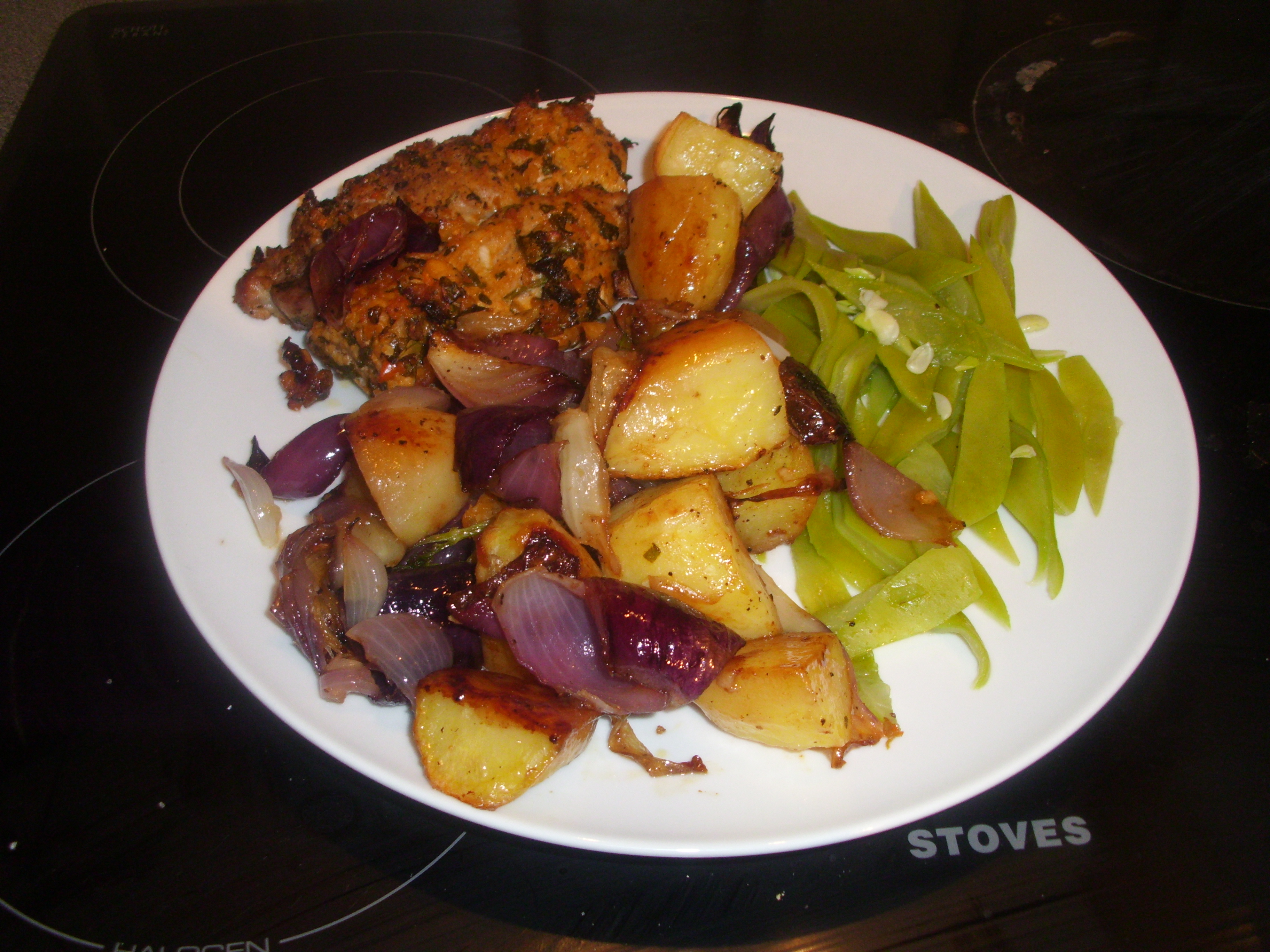
Pork (or lamb) and fennel tray bake – absolutely divine!

4 Sep

I love recipes that can be cooked in one pot or, like this one, in a roasting dish.  Cuts right down on washing up and the flavours seem to really enhance one another.  In this instance I used pork fillets, as suggested in the original recipe, but I think it would be great with lamb steaks as well, providing all fat is removed.  I was a bit worried about the fennel as I sometimes find it is a bit strong.  I didn’t need to though, I think the boiling made it more mellow and it was a perfect ingredient for this dish.

The rub for this is great, a hint of sweetness from the honey, some sour from the lemons and a bit of heat from the chilli.  I use chillies a lot in my cooking as my husband loves things with a bit of a kick.  Sometimes they are so subtle that the heat is barely noticeable, others they give real heat and depth to a dish.  I realised that I have not included any information on chillies in my previous blogs.  Very remiss of me but partially rectified today.  Here is a bit of chilli trivia to be going on with, courtesy of the foodreference and the Discovery Channel websites.

  • The seeds are NOT the hottest part of peppers. It is at the point where the seed is attached to the white membrane inside the pepper that the highest concentration of capsaicin (the compound giving peppers their pungent flavor) is found.
  • Capsaicin, the ‘hot’ constituent in chile peppers, is not water-soluble – it is soluble in fat and alcohol. So don’t drink water to cool your mouth after eating very hot chilies. Drink milk or beer, or eat some ice cream or guacamole if your mouth is on fire.
  • Hatch, New Mexico is known as the “Green Chile capital of the World”.
  • Scientists have found connections between capsaicin (the ingredient that makes chillies hot) and a component of tarantula venom.
  • Upon arrival in Mexico, some early Spanish priests, aware of the passion people had for chillies and unsure of its powers, assumed they were aphrodisiacs and in their sermons warned against consumption of food that was ‘as hot as hell’s brimstone’.
  • Eating chillies is addictive. When capsaicin comes in contact with the nerves in your mouth, pain signals are sent to the brain. Subsequently, the brain releases endorphins, natural painkillers, that create a feeling of well-being.
  • Indian tribes strung chillies together and tied them to their canoes to ward off evil spirits they believed might be lurking in the water

The original recipe is based on one from the Good Food website which I have adapted slightly.  Here is a link to the original recipe if you want to take a look.

http://www.bbcgoodfood.com/recipes/845664/roast-pork-with-fennel-and-preserved-lemon

Pork (or lamb) and fennel tray bake                            Serves 2 (easily doubled)

  • 4 medium red skinned potatoes, peeled and cut into medium chunks (about 1.5 inches)
  • 1 fennel bulb, core removed and cut into 8 wedges
  • 2 red onions, peeled and cut into 6 wedges each
  • Olive oil
  • 1 pork fillet, any fat or sinews removed, halved lengthways then widthways to give 4 pieces. If making with lamb use two large lamb steaks, fat removed.
  • 6 slices of preserved lemon, rinsed and flesh removed
  • 1 clove garlic
  • 1 small red chilli, seeded (this will give medium heat so adjust to suit personal taste)
  • 1/2 tsp smoked paprika
  • 1/2 tbsp honey
  • small handful of fresh coriander
  1. Preheat the oven to 200C/fan 180C/gas 6.
  2. Bring a pan of salted water to the boil and add the potatoes and fennel.  Bring back to the boil and cook for 2 minutes.  Drain well and dry on kitchen paper.
  3. Put the potatoes, fennel and onions in a roasting tray, drizzle with olive oil and season with salt and black pepper.  Roast for 20 minutes.
  4. Meanwhile, put the lemon rinds, garlic, chilli, paprika, honey and coriander in a small chopper with 1 little olive oil (about 1 tbsp).  Chop until the lemon is finely chopped.  Rub the mix into the meat, coating well.  Season.
  5. When the vegetables have cooked for the 20 minutes, lay the meat on top and return to the oven for another 20 – 25 minutes or until the meat is cooked through and the vegetables are tender and slightly golden.  Serve immediately with a green vegetable if you have a mind to.

    This slideshow requires JavaScript.

Bacon and asparagus hash – a dream come true!

27 Aug

Dreams are strange things.  Martin Luther King dreamt about changing the world.  I dream about new recipes.  How sad is that!  This recipe was literally dreamt up.  When I told my husband about it he said how good it sounded so I decided to give it a go.  It was absolutely delicious and we will definitely be having it again.

I love hash of any description.  I have published a corned beef hash and a mushroom hash previously on my blog.  I suppose this one is not significantly different in methodology but the combination of flavours is exquisite.  A few days earlier I had made a spaghetti dish with bacon and asparagus.  Maybe that is what triggered the dream.  Whatever it was, it was I will be eternally grateful.

According to Wikipedia, dreams are successions of images, ideas, emotions and sensations  that occur involuntarily in the mind during certain stages of sleep. There have been umpteen studies and theories about dreams but , it is fair to say, that the content and purpose of dreams is still not definitively understood. The scientific study of dreams is called oneirology.

Dreams mainly occur in the rapid-eye movement (REM) stage of sleep—when brain activity is high and resembles that of being awake. REM sleep is revealed by continuous movements of the eyes during sleep. At times, dreams may occur during other  sleep stages. However, these dreams tend to be much less vivid or memorable. Dreams can last for a few seconds, or as long as twenty minutes. People are more likely to remember the dream if they are awakened during the REM phase.

Apart from humans, animals have dreams.  I remember when I was young, my dog, Lassie, used to sometimes twitch and make funny little noises in her sleep.  Mum used to say she was catching rabbits.

Anyway, enough of dreams.  Here is the recipe I dreamt about.

Bacon and asparagus hash                       Serves 2 (easily doubled)

  • 6 slices of streaky bacon or pancetta, rind removed and cut into 1 inch pieces
  • 1 onion, sliced thinnly
  • 2 cloves garlic, finely chopped
  • 1 red chilli, sliced and seeds removed
  • 10 asparagus tips
  • 4-5 New Potatoes (Charlotte are good) peeled and sliced (about 1/4 inch)
  • 100g mushrooms, sliced
  • 1 tsp olive oil
  • 2 eggs
  1. Boil the potatoes in salted water for about 5 minutes or until just tender.  Remove with a slotted spoon and set aside. 
  2. Boil the asparagus in the water left in the pan for 3 minutes.  Remove and put in iced water immediately to stop the cooking process.
  3. Fry the bacon in a non-stick pan until brown. Remove and set aside.
  4. Add 1 tsp olive oil to the frying pan and fry the onions over a medium heat until softened.  Add the chilli and garlic towards the end.
  5. Add the mushrooms  and bacon to the onions and continue to cook for about 3 minutes until the mushrooms are softened.  Add the potato and carefully combine.  Cook for about 5 minutes, turning frequently.  If it starts to stick to the bottom of the pan add a little more oil.
  6. Meanwhile, bring a pan of water to the boil.  Add a pinch of salt and a little white wine vinegar.  Poach the eggs for 3 minutes. 
  7. Add the asparagus to the hash and carefully combine.
  8. Divide the hash between two plates and top with the poached egg.

This slideshow requires JavaScript.

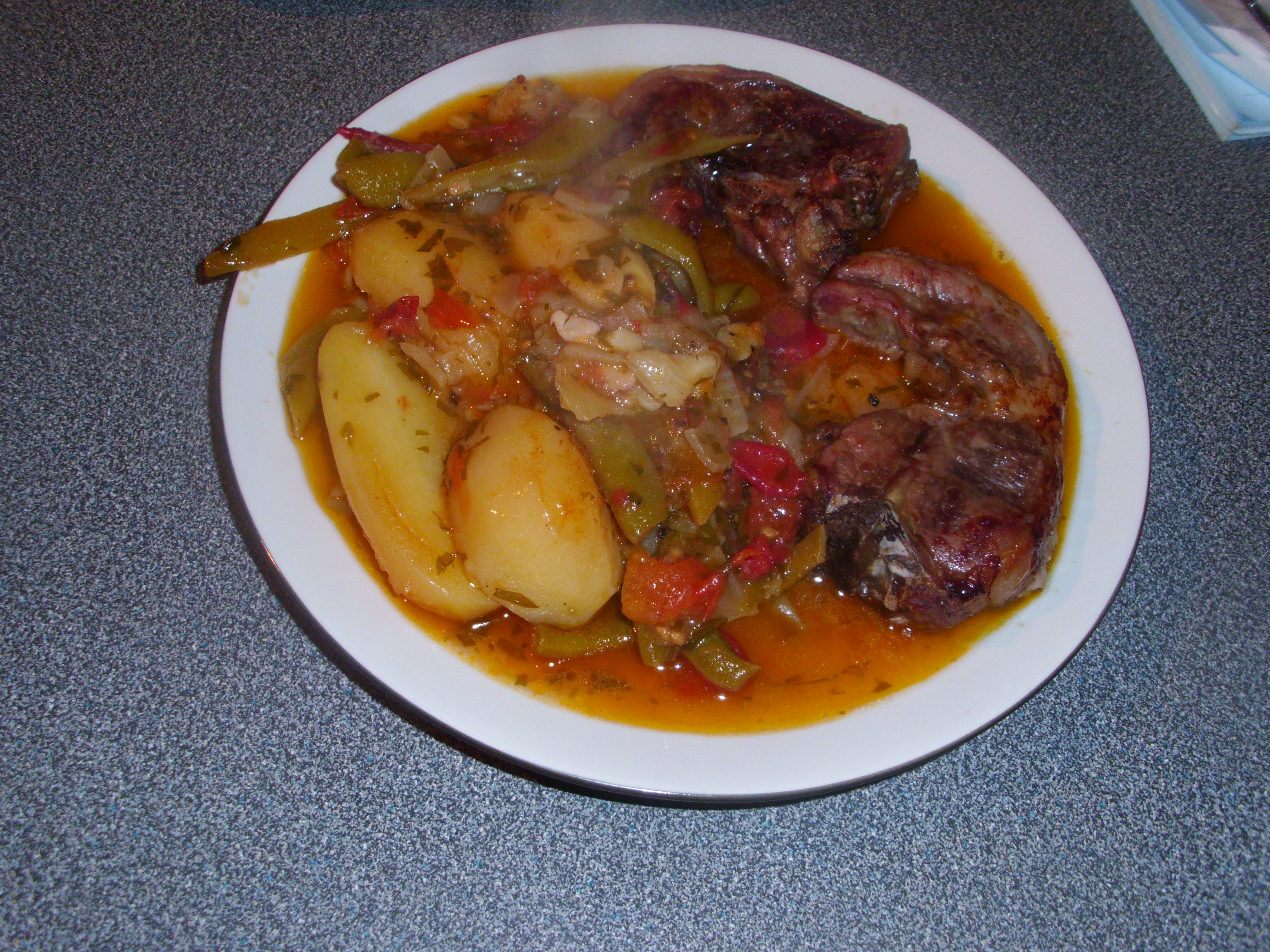
Greek lamb chops with fresh green beans in tomato sauce. Amazing!

3 Aug

The star of this meal has to be the beans in tomato sauce.  I remember the first time I ate these beans.  It was in an ice cream parlour in Gouves, Crete.  You may be surprised at the venue but, apparently, in Greece, at the time, you were not taxed for selling ice creams but were for selling food.  Anyway, the owner and cook was a man named Yianni.  What a fantastic man he was. If I live to be a hundred I don’t think I will ever meet anyone as kind or gentle.

The first time we went to his ice cream parlour we asked if he did food.  Yes, he answered, what would you like?  We asked him if he did goat, one of our favourite foods in Greece.  Of course, he said, so we ordered goat with fried potatoes and a Greek salad.  He served us with a large beer for Terry and a glass of homemade red wine for me (in a half pint glass) and left us to savour the moment.  Two seconds later we saw him leave via the side entrance on his bike, returning after 10 minutes with all the ingredients he had bought from the butcher and the grocer.  You can’t get fresher than that!  The food was delicious.  My one complaint was that, after eating a table weighed down with food and drinking 2 large beers and 2 large wines, the bill only came to 4 Euros.  Of course we said it was not enough and forced a 10 Euro note into his hand.  He was mortified and insisted we had at least one more round of drinks on him.  I don’t think I can remember walking home that night.  We became close friends after that and, during our two-week holiday, he enjoyed making us traditional Greek meals that we enjoyed eating.  Apart from the food Yaya made for us and the food we have in Lardos, Rhodes, I don’t think I have ever tasted better!

We were in Gouves at the time of the Omagh bombing.  Friends that we met there lost a brother who could only be identified by the keys in his pocket.  Such a senseless waste of life.   Yianni was fantastic and arranged for their immediate return to Ireland while the holiday reps partied in a nearby bar and would not help.  His actions were typical of the Greek people, something to remember in the troubled times Greece is currently experiencing.

I hope you try this vegetable dish.  It will remind you of sunny days spent in Greece.  The sauce is divine, mopped up with crusty bread.  We even eat this cold as, like so many Greek dishes, the taste improves with age.  I served this with Greek lamb chops and the combination was amazing.  Absolutely delicious!

Greek Lamb Chops with fresh green beans in tomato sauce         Serve 4

  • 1/2 cup olive oil
  • 1 onion, finely sliced
  • 2 clove garlic, thinly sliced
  • 1 lb runner beans
  • 2 medium potatoes (I used Maris Piper)  peeled and cut into thick chip shapes
  • 4 medium ripe tomatoes, chopped roughly
  • 2 tbsp finely chopped fresh parsley
  • Salt and pepper

For the chops

  • 8 lamb chops
  • 4 cloves of garlic, unpeeled
  • 2 sprigs rosemary
  • Salt and pepper
  • Olive oil
  1. Saute the onion and garlic in the oil in a large pan for about 5 minutes until the onion starts to soften but does not change colour.
  2. Top and tail the beans and cut off the edges then slice into long pieces.  Add to the onions and saute for 3 minutes.
  3. Add the potatoes and continue to saute for another 5 minutes.
  4. Add the tomatoes, season well and add just enough hot water to barely cover the vegetables.  Cover and simmer for about an hour or until the potatoes are tender.
  5. In the meantime, put the chops in an oven proof dish with the whole cloves of garlic.  Lay the rosemary sprigs on top then drizzle with olive oil.  Season and bake in a preheated oven (200C/190C fan/Gas 6) for 3/4 hour or until chops cooked to your liking.  Turn once during cooking to brown both sides.
  6. Add the parsley and cook for a final 10 minutesServe

This slideshow requires JavaScript.

Keema curry – so versatile and great for kids!

18 Jul

For those who do not know it, keema curry is made from minced beef.  This dish is great for kids as it is mild and really tasty.  It is versatile too.  I use it to make stuffing for my Whole Curried Poussin (recipe to follow at a later date) and it goes great with jacket potatoes for a healthy supper.  Make lots as it freezes really well without the peas, as these have been frozen once.  Just add the peas before reheating, fantastic.  Apparently, Keema curry is one of the least favourite choices in Indian cuisine.  I am as guilty as the next person for never trying it in an Indian restaurant but I will definitely make it more often at home in the future.  Always buy good quality mince meat otherwise you will have a greasy meal but, other than that, this recipe is virtually indestructible.  It is great for novice curry cooks as there is no risk of overcooking the meat or the meat being too chewy and, in the current climate, it makes a fantastic meal for pennies!  Any type of mince will do, even quorn or soy mince for vegetarians.

When mince pies where first made in the 16th Century, they contained shredded meat that was bulked out by dried fruit and spices.  The spices were brought over from the Holy Land and it was thought important to add three spices to the pies to represent the gifts taken to Jesus by the Three Wise Men.  There are a few superstitions about mince pies.  Being a Derbyshire lass I always like to know about these so I have listed a few below.

  • It was thought lucky to eat one mince-pie on each of the Twelve Days of Christmas, ending on the 6th January. 
  • Bad luck would also be the curse if you stir the mincemeat the wrong way when making it.  Always stir it in a clockwise dierction.
  • Refusing a piece of mince pie at Christmas dinner means you will have bad luck for the coming day. Some sources, on the other hand, say you’ll have bad luck for a whole year. So eat up.
  • Mince pies should always be eaten in silence.
  • Never cut a mince pie with a knife as you will cut your luck.
  • Make a wish when you eat your first mince pie of Christmas.

Well here is the recipe.

Keema curry                                                  Serves 6

  • 2 lb lean minced meat (beef, pork, lamb, chicken or vegetarian options)
  • 2 tbsp unsalted butter
  • 1 large onion, finely chopped
  • 2 cloves garlic, finely chopped
  • 2 inch piece of root ginger, finely chopped
  • 1 tsp turmeric
  • 1 tsp ground coriander
  • 1/2 tsp red chilli powder
  • 4 cloves, ground
  • 1 brown cardamom, ground
  • 400g can chopped tomatoes
  • 1 tbsp tomato ketchup
  • 200ml canned tomato soup (I use Heinz)
  • 1 red pepper, chopped
  • 1 green or red chilli, chopped finely
  • 2 tbsp garam masala
  • 1 tbsp chopped fresh coriander
  • 1 tbsp chopped fresh mint 
  • Handful of frozen peas
  • Wedges of hard-boiled egg to garnish (optional)
  1. Heat half the butter in a large, lidded saute pan and fry the mince for about 10 minutes until brown all over.
  2. In a separate pan or wok, heat the remaining butter and stir fry the onion, ginger and garlic over a medium heat until golden.  Add the turmeric, ground coriander, chilli powder, cloves and cardamom.  Mix well, adding a little water if the mix seems too dry.
  3. Preheat the oven to 190C/180cC fan/gas 5.  Add the stir fry to the mince with the tomatoes and ketchup.  Mix well, cover and cook in the oven for 20 minutes.
  4. Take the dish out of the oven and stir in the soup, red pepper, chilli and garam masala.  Return to the oven and continue to cook for a further 30 minutes. 
  5. Switch off the oven and remove the dish.  Stir in the peas, mint and coriander.  Return the dish to the oven for a few minutes to enable the peas to warm through.
  6. Freeze at the end of Step 5 in rigid containers if required and thaw completely before reheating.
  7. Serve with rice, garnished with wedges of boiled egg if desired.

    This slideshow requires JavaScript.

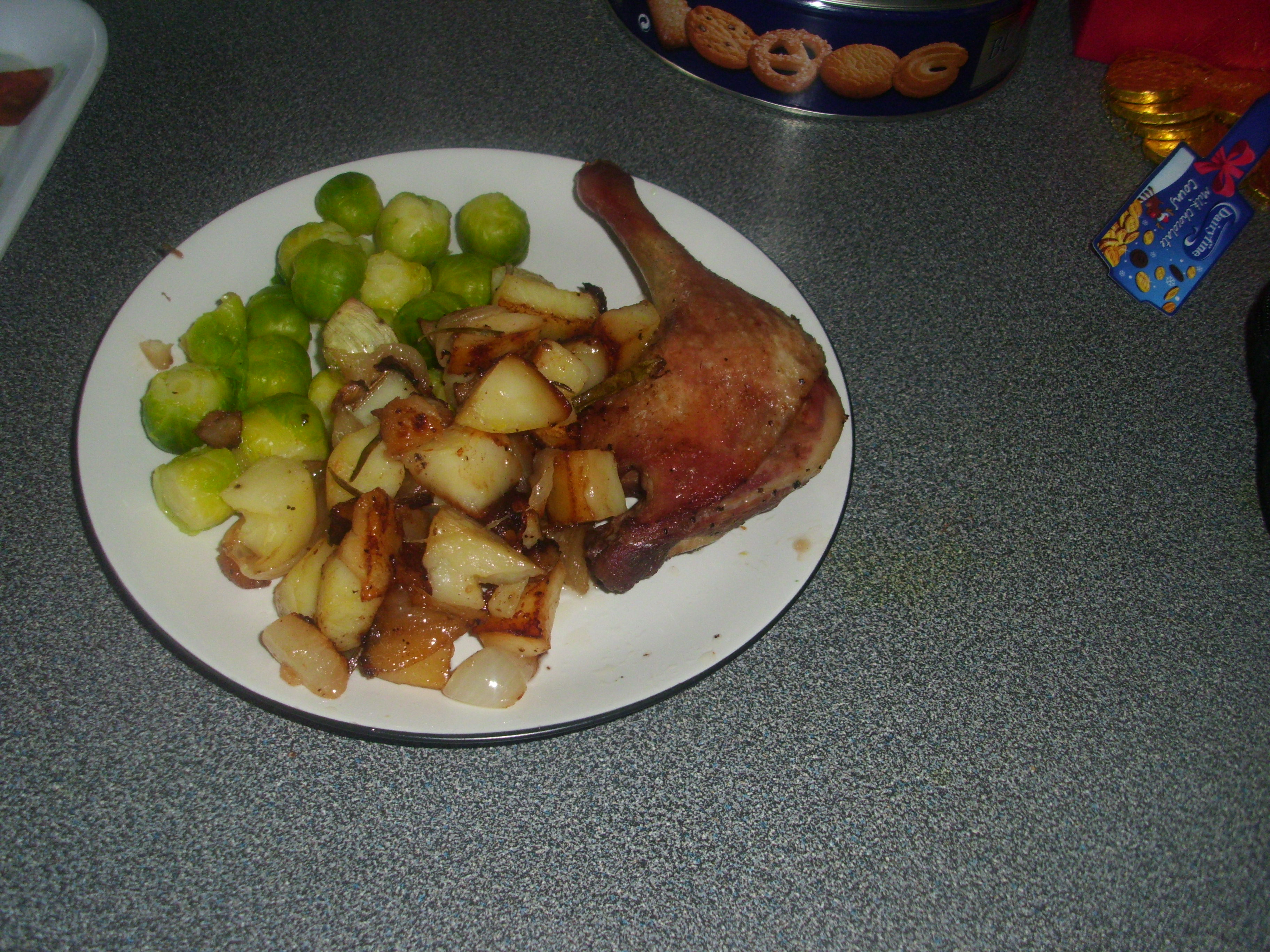
One-pan roast duck – just add seasonal vegetables for a great meal.

24 Jun

I first ate duck fairly late in life, probably when I was in my late 30’s.  I can’t even remember people talking about actually eating duck when I was young and my only thoughts on the subject were that they lived in the River Gardens in Derby and loved to eat stale bread.  Thinking back, my first experience of eating duck had to be as a starter in a Chinese meal when on holiday.  It must have been on holiday as that was the only time I ate in a Chinese restaurant.  There were a couple of takeaways in the small town where I lived but nowhere to actually sit and eat a meal.  My first taste was a revelation!  Eaten with Hoisin sauce, celery and onions, wrapped in a small pancake.  Heaven!  The first time I cooked duck was one Christmas.  Mum and Dad were coming for their Christmas dinner and, as with every other year, they usually stayed for a few days.  I had cooked a traditional turkey dinner for Christmas Day (although I think I had drank too much wine with the neighbours and forgot to make the gravy!).  I knew Dad loved duck so I had bought two small ducks from the butcher to eat on Boxing Day.  My intention was to make the Chinese pancake recipe, a bit adventurous as, in those days, I was a novice to cooking anything other than meat and two veg meals.  I remember the recipe saying the duck skin had to be completely dry so that it crisped up during cooking.  We had limited kitchen facilities at the time so I put the ducks, unwrapped, in the greenhouse, secured the door and left them for 24 hours.  Just to reassure my friends who live in warmer climates, this was not risky as the temperature in the greenhouse was about 2 degrees C and not an insect in sight.  I made my own pancakes and even my own Hoisin sauce and the finished meal was fantastic.  I found the recipe in a Chinese cooking book that I gave away at some point.  Isn’t it typical that since then I have never found a recipe that comes up to the same standard.  I wonder where that book is now.

Nowadays we eat duck fairly regularly.  As there are just two of us I usually buy a couple of duck breasts rather than a whole bird.  This recipe, however, uses duck legs.  I was pleasantly surprised how much meat there was on the legs I bought.  I doubt I will start replacing the breasts with legs for most of my recipes but, for this one, they were perfect.  This recipe is based on one of Janet Allen’s, a Dublin born cook who has written some fantastic cookbooks.

One-pan roast duck                      Serves 2 (easily doubled)

  • 2 duck legs, skin left on
  • 2 onions, cut into wedges
  • 1 sprig rosemary
  • 3 small turnips, peeled and cut into small cubes (about the size of a thumb nail)
  • 4 medium potatoes (floury eg King Edwards or Maris Piper) cut into small cubes as above
  • 1/2 tbsp olive oil
  • salt & black pepper 
  1. Heat the oil in a large ovenproof pan that has a lid.  Fry the duck breasts, skin side down, over a medium heat for about 5 minutes or until the skin is browned and going crispy.  Surround the duck with the onion and rosemary while it is browning.
  2. Add the potatoes and turnip, season and mix to coat all the vegetables in the fat.  Cover and transfer the dish to a preheated oven 180C/160Cfan/gas 5 for 75 minutes.
  3. Remove the lid and continue cooking in the oven for a further 15 minutes or until the duck skin is crispy and the vegetables are tender.  Serve with seasonal green vegetables.

    This slideshow requires JavaScript.