Archive | July, 2014

Tuna pasta bake, delicious!

22 Jul

DSCI0184 Every now and again I try to invent a dish that my daughter in law will eat. She is a Pescatarian i.e. she will eat fish but no meat.  I know she loves pasta and I didn’t have a lot of time on my hands so I made this out of what I had in the fridge and cupboard at the time. She said it was really tasty so it seems it was a hit.

Pescetarianism (also spelled pescatarianism) is the practice of following a diet that includes fish or other seafood, but not the flesh of other animals.

One of the most commonly cited reasons is that of health, based on findings that red meat is detrimental to health in many cases due to non-lean red meats containing high amounts of saturated fats, choline and carnitine. Eating certain kinds of fish raises HDL levels, and some fish are a convenient source of omega-3 fatty acids, and have numerous health benefits in one food variety. A 1999 meta-analysis of five studies comparing vegetarian and non-vegetarian mortality rates in Western countries found that in comparison with regular meat-eaters, mortality from ischemic heart disease was 34% lower in pescetarians, 34% lower in ovo-lacto vegetarians, 26% lower in vegans and 20% lower in occasional meat-eaters.

Concerns have been raised about consuming some fish varieties containing toxins such as mercury and PCBs, though it is possible to select fish that contain little or no mercury and moderate the consumption of mercury-containing fish.

Similarly to vegetarianism, some pescetarians adopt the diet on the basis of ethics, either as a transition to vegetarianism, not treating fish on the same moral level as other animals, or as a compromise to obtain nutrients not found in plants as easily.

Well, here is the recipe.

Tuna Pasta Bake                                        Serves 4

  • 1 onion, finely chopped
  • 1 green pepper, finely chopped
  • 1 clove garlic, crushed
  • 1 tbsp olive oil
  • 1 400g can chopped tomatoes
  • Salt and freshly ground black pepper
  • 1 good pinch hot chilli powder
  • 250g pasta shapes (I used Gellini)
  • 2 x 300g tins tuna in sunflower oil, drained
  • 2 tbsp basil leaves, torn
  • 1 oz butter
  • 1 oz plain flour
  • 1 pt milk
  • 100g cheddar cheese, grated
  • 1 tsp English mustard (ready-made)
  • small handful grated parmesan
  1. Put a large pan of salted water on to boil then cook the pasta as per packet instructions.  Drain, reserving 200 ml of the pasta cooking liquid.
  2. Heat the olive oil in a large pan and gently fry the onion and green pepper over a low to medium heat for 10 minutes until soft but not coloured.  Add the garlic and cook for 1 minute more.
  3. Add the chopped tomatoes, season and add the chilli powder. Simmer for a few minutes.
  4. Add the drained pasta and tuna, breaking the latter into large chunks.  Stir carefully so as not to break down the tuna too much.  Add a little of the reserved pasta cooking liquid to loosen the sauce.
  5. Add the basil, mix gently then transfer all to an oven to table dish.
  6. To make the cheese sauce, melt the butter in a pan, stir in the flour and cook for 1 minute.  Add the milk and whisk until the sauce is smooth.  Cook over a medium heat until the sauce thickens, stirring continuously.  Season lightly and add 3/4 of the cheddar cheese and the mustard.
  7. Pour the sauce over the pasta and sprinkle the remaining cheddar and Parmesan over the top.
  8. This can be frozen at this stage.  Thaw completely before reheating.
  9. When ready to eat, heat an oven to 180C/170C fan/gas 5.  Bake the pasta dish for about 30 minutes or until the sauce is bubbling and golden on top and the pasta is heated through.
This slideshow requires JavaScript.


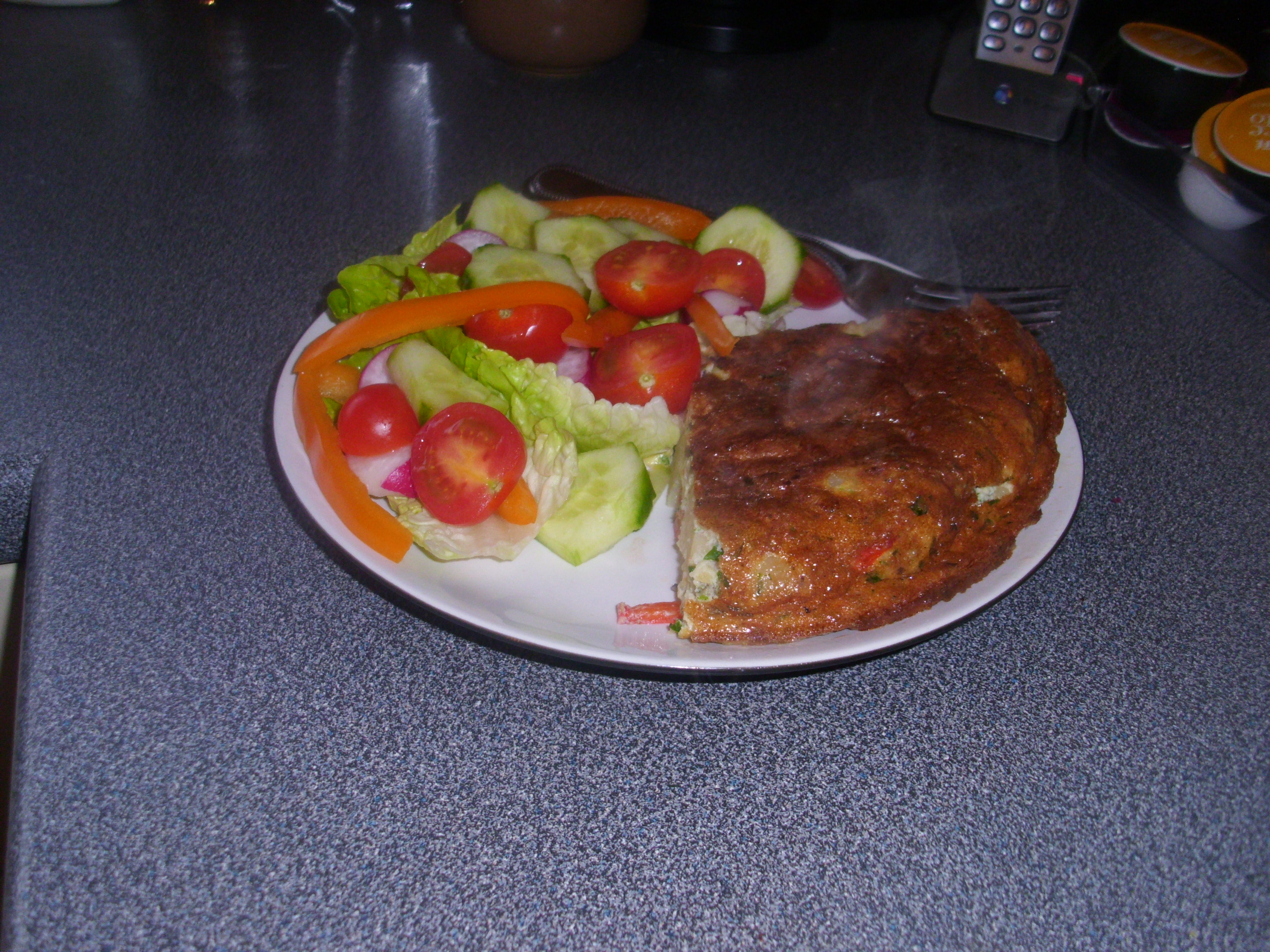
Red pepper and potato tortilla – a great lunch!

10 Jul

I think the first time I had a tortilla was in Majorca.  They brought little squares of tortilla to go with our drinks at lunchtime.  I must say I had never thought of eating what is basically a fat omelette, cold, but it was delicious.  I love this recipe because it is so quick and easy, using bottled peppers and either left over new potatoes or even good quality tinned new potatoes.  It makes a great lunch to have with salad and any leftovers can be eaten cold if you get peckish.  Not that we ever have leftovers, it is too good to leave any!  Tortillas are similar to their Italian counterpart, frittatas.  Both are much thicker than an omelette as we know it in the UK , possibly due to the beating of the eggs which contribute to a much thicker, lighter batter.  It is thought that tortillas date back to the mid 1800’s when poor people would have their own hens and grow their own vegetables.  They provided a cheap but nutritious meal for the family.  Today good quality eggs are no longer cheap but, in comparison to the cost of meat, they are still a great option.

There have been numerous health issues related to eggs.  Some say that eating too many eggs will raise cholesterol levels and cause an early death from heart disease.  Others researchers have said this is a load of rubbish and you can eat as many as you like.  I remember Edwina Curry once warned us off eating eggs due to the risk of Salmonella but, many years later we are still eating them and I haven’t heard of a dramatic rise in deaths attributed to this.  All in all I suppose if you eat them in moderation you should not come to any harm.  Knowing how to understand egg labelling may help to reduce the risk.  Here is a brief summary.

Under European legislation eggs must be stamped with their best before date and this should not be more than 21 days after laying.  It is sometimes difficult to see what the stamp on the eggs say but it is usually clearly marked on the egg box.  I always buy them with as near to 21 days left as possible.  If you are unsure, a fresh egg will lie flat in a bowl of water and, as they get older, they will start to turn more upright.  Apart from the date stamp on the egg there is also a code which will give you information about the farming methods for where the egg was laid.  Look at the first letter of the egg stamp for this. 

  • 0 indicates the egg is organic
  • 1 means it is free-range
  • 2 is that it is a barn egg
  • 3 is that the hens are caged

Well, here is the recipe.

Red pepper and potato tortilla                                    Serves 4

  • 6 large eggs, beaten
  • 250g/8 oz cooked new potatoes, sliced (you can use leftover potatoes or even tinned if you are short of time)
  • 2 red peppers from a jar, drained and cut into strips
  • a handful of chopped parsley
  • 1 small red onion, peeled and thinly sliced
  • salt and black pepper
  • Olive oil
  1. Preheat an oven to 220C/200c fan/gas 7.
  2. Add the peppers and the parsley to the eggs and season and mix well.  Set aside.
  3. Heat a little oil in a non-stick ovenproof deep omelette pan or frying pan.  Gently fry the onion until it is soft but not coloured.  Add the potatoes, mix well, gently squashing down a little.  Cook for 4 minutes, turning occasionally, or until the potatoes are starting to turn golden and are slightly crisp around the edges.  Tip the potato mix into the eggs and stir well.
  4. Add a little more oil to the pan then tip in the egg mixture.  Move it around the pan a little so all the ingredients are evenly distributed.  Cook on the hob for 3-4 minutes then transfer to the oven and continue cooking for a further 10 minutes.
  5. Turn out onto a plate and slice.

    This slideshow requires JavaScript.

Spaghetti with a rabbit and mushroom sauce – what a great dish!

2 Jul

I bet there are those who will be thinking they could never eat rabbit.  Well, you don’t know what you are missing!  I was brought up in the country and shooting rabbits was part of every day life.  I know they are little fluffy things with adorable eyes but they are considered a major pest for farmers, destroying their crops and even munching on trees.  They only live for about one year in the wild but during that time they can cause utter devastation.   Mum often used to cook rabbit stew.  It tasted great but got a bit boring after time and it was difficult to eat what with the small bones and occasional shot!

Rabbits were brought into Britain about 2000 years ago by the Romans who kept them in walled enclosures with deep foundations so they could not escape.  When the Romans left it is likely that all the rabbits died.  They were reintroduced to Britain by the Normans and it is believed that this was the time that some escaped and Britain had their first wild rabbit.

Wild rabbit certainly tastes so much better than the farmed variety but it is really difficult to find.  I was lucky enough to buy one from our local Farmers Market.  The stall was owned by Pick’s Organic who are based in Barkby Thorpe, Leicestershire.  Not only do they sell at Farmers Markets but they also have a great Farm Shop with its own Butchers Shop, as well as doing door to door delivery etc.  Here is a link to their website if you are interested in finding out more:

http://www.picksorganic.co.uk/

The rabbit was delicious.  Meaty joints full of flavour, perfect for this dish.  Oh, and by the way, the dish takes the meat off the bone so there are no nasty surprises, not even shot!

Here is the recipe, I hope you give it a try.

Spaghetti with a rabbit and mushroom sauce                                   Serves 2-3

  • 1 rabbit (wild if you can get it) jointed
  • 2 tbsp olive oil
  • 1 clove garlic, finely chopped
  • 75ml dry white wine
  • 1tbsp tomato puree
  • 250 ml chicken stock (use a good quality stock cube if you don’t have homemade)
  • 125g chestnut mushrooms, thinly sliced
  • 3/4 red pepper, deseeded and chopped
  • 15g butter
  • 200 – 300g dried spaghetti
  1. Heat the oil in a large pan over a medium heat.  Add the garlic and the rabbit joints and cook until browned all over.
  2. Add half the wine and let it come to the boil to burn off the alcohol.Stir in the tomato puree and half the stock.  Cover and cook for 15 minutes.
  3. Turn the heat down to low and turn the rabbit joints over.  Cover and continue cooking for a further 25 minutes when the rabbit should be tender.  Remove the pan from the heat and take out the rabbit, leaving the cooking sauce in the pan.  Allow the rabbit to cool then carefully strip the meat from the bones, making sure no small pieces of bone are mixed with the meat.
  4. Cook the spaghetti as per packet instructions.
  5. In a separate pan add the butter and fry the mushrooms and pepper for about 4 minutes over a medium heat.  Add the remaining wine and cook for a couple more minutes or until the pepper is tender.
  6. Return the rabbit meat to the pan with the remaining stock and tomato puree.  Stir in the vegetables and cook for a couple of minutes so the flavours combine.
  7. Drain the spaghetti and serve it topped with the meat sauce.

    This slideshow requires JavaScript.